Tag

placemaking

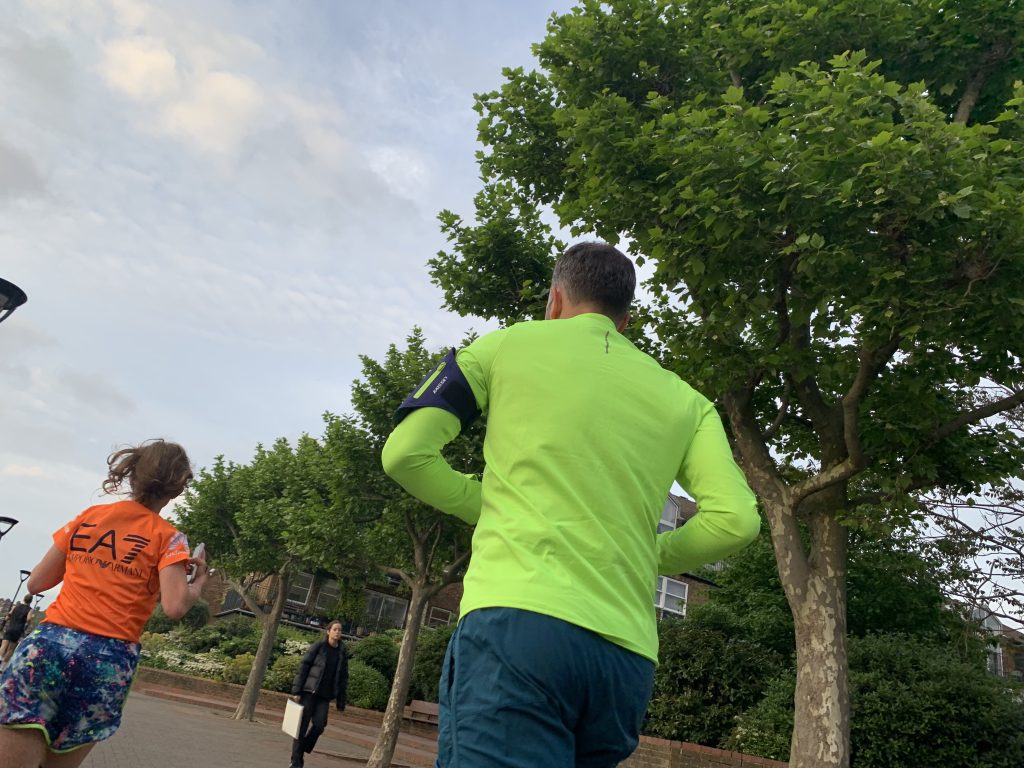
People jogging outdoors along a tree-lined path, with one person in a bright green running shirt in the foreground.

Digital placemaking: enhancing physical activity for health and wellbeing

By Place

The UK population is ageing steadily, with over-65s projected to make up a quarter of the population by 2050. While life expectancy in the UK has broadly increased, healthy life expectancy has not kept pace. This means many people are living longer in poor health. Moreover, ageing is not uniform: inequalities in health outcomes and access to services by gender, ethnicity, geography, and socioeconomic status shape how people experience later life (UK Parliament Briefing, Sept 2025).

Promoting regular physical activity, alongside a healthy diet, is one of the obvious yet essential ways to achieve and maintain better health, helping to improve quality of life and reduce healthcare costs, as well as address health inequalities across all demographic groups.

The key question for this article is – how can we make exercise more enjoyable and something people want to do?

This is where digital technologies come into play; placemaking, in particular, can support public health through sport and movement by leveraging technology to create more engaging, accessible and inclusive environments. There are examples of place-based technologies that are doing this well already, as I will examine below.
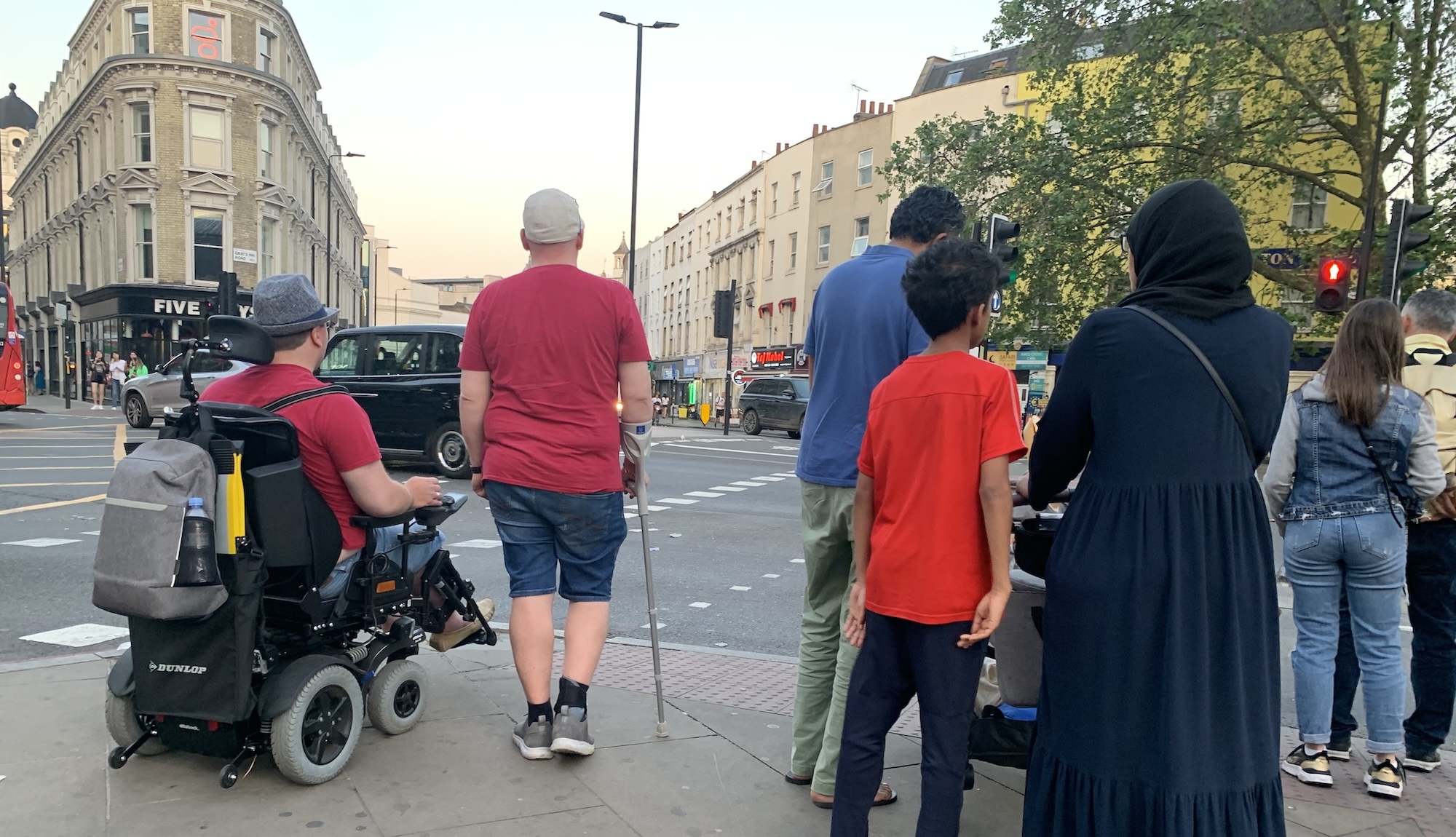
A variety of people waiting to cross a busy road, some with access supports - a pram, walking stick, wheelchair.

Incentive-based placemaking

Incentive theory is a psychological theory based on the notion that human behaviour is motivated by a desire for external rewards; money, recognition and promotions are a few examples of positive incentives that may encourage people to work harder and perform better.

It makes sense that this would translate well to physical activity, which we can see in the success of apps like Sweatcoin. The free step counter and activity tracker converts steps into a virtual currency, which can then be spent on a variety of products and services in a dedicated marketplace. This includes fitness gear and classes, as well as the option to donate to charity.

Importantly, the app has proved to have sustainable benefits on physical activity. Research from the British Journal of Sports Medicine showed Sweatcoin users’ physical activity increased by 20% over a six-month period. The report underlines the benefits of the app in allowing people to look back and feel good about their achievements, rather than setting future goals, which if not achieved, can have negative effects on motivation.

This further highlights to me the need to change the rhetoric around exercise and movement. Rather than shaming people into exercise and making them feel bad for not doing so, the emphasis needs to be on the benefits of exercise and how it can improve quality of life. It is also about making exercise seem less of a daunting task and more accessible, which apps like Sweatcoin are doing by not only rewarding long runs but any kind of step-based movement. 

Collective movement

It is a common misconception that exercise has to be strenuous to be beneficial. This next project challenges that assumption, instead demonstrating how creativity can promote health and wellbeing in a fun and sociable way.

Compose is an interactive projection that allows people to take part in a collective performance exercise. It works by using a step-on-a-dot interface inviting the public to make music and dance together. There are 37 dots labelled with distinct graphics associated with different musical partitions; different dots are available to play at different times, encouraging different types of movement and exploration across the space.

Moreover, it is about bringing the community together, which is powerful in itself. Not only for community cohesion; research has shown that human behaviours spread socially, including how much people exercise, and that social relationships play an important role in encouraging healthier habits.
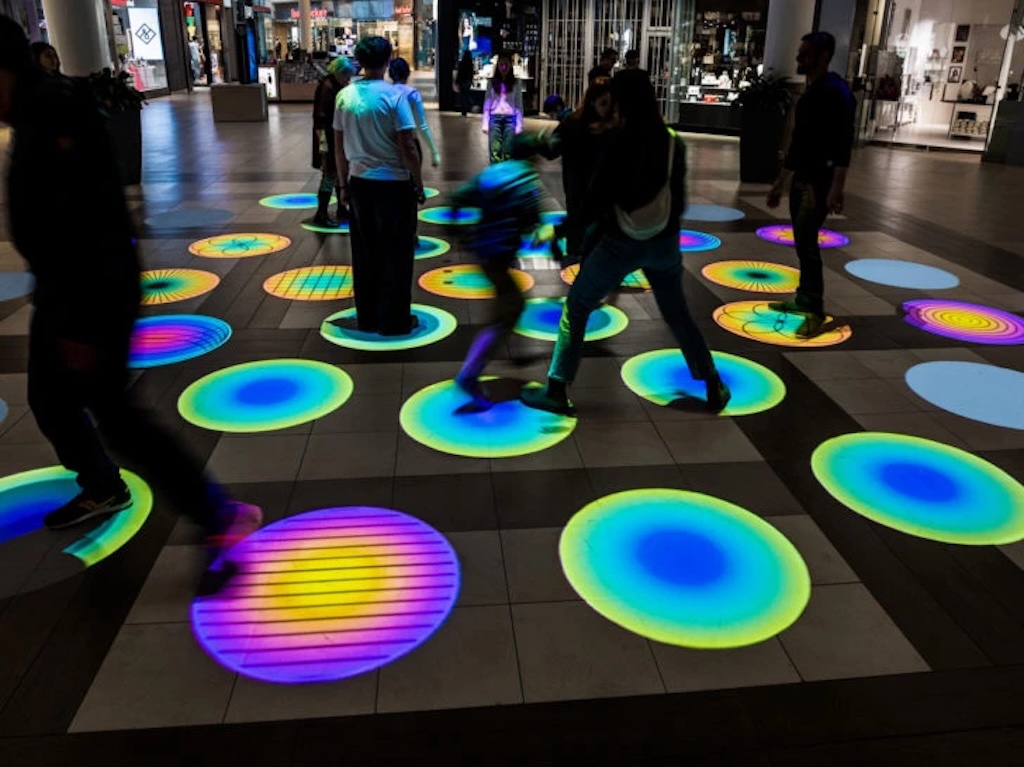
Photo of people jumping on rainbow coloured lights on the floor in a dark shopping mall.

Interactive shopping centre artwork, Laval, California. Photo: Daily Tous les Jours

Virtual challenges

Similar to rewards and incentives, challenges can make physical activity more fun and engaging, thus motivating people to move more.

The Conquerer app, for example, has a variety of digital fitness challenges within public spaces, which can be completed by running, walking or cycling in any time-frame, individually or in teams. Some of the virtual challenges on offer include the English Channel, Angkor Wat, Star Trek and Harry Potter, which are all of varying distances and appeal to different interests and goals.

The app is also geared towards organisations looking to boost health and wellness programmes. Companies can create team-building events and workplace competitions, as well as customised challenges with specific milestones and engagements. This harnesses the benefits associated with both incentive-based and collective movement, and is an effective way to promote healthier habits on a mass scale.
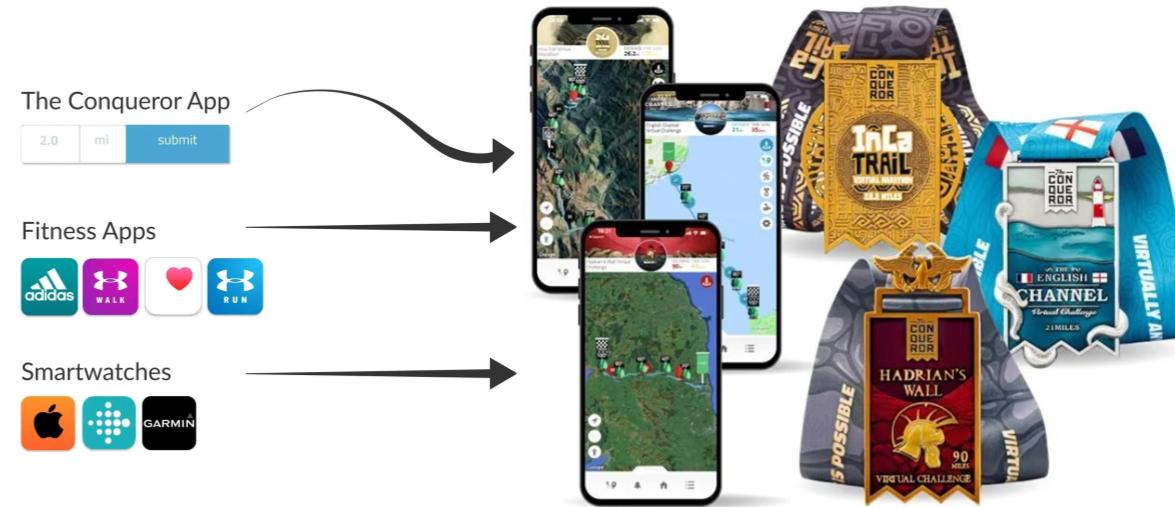
Screengrabs from the Conqueror app, along with badges for three quests, and other health tools that it can integrate with such as Adidas app and Apple watch

Geocaching

Billed as the world’s largest treasure hunt, geocaching is an outdoor recreational activity in which people use their smartphone GPS to find nearby geocaches. These caches are created and hidden by other users at specific locations, often disguised as everyday objects so that people engage with their surroundings and not just through their phones.

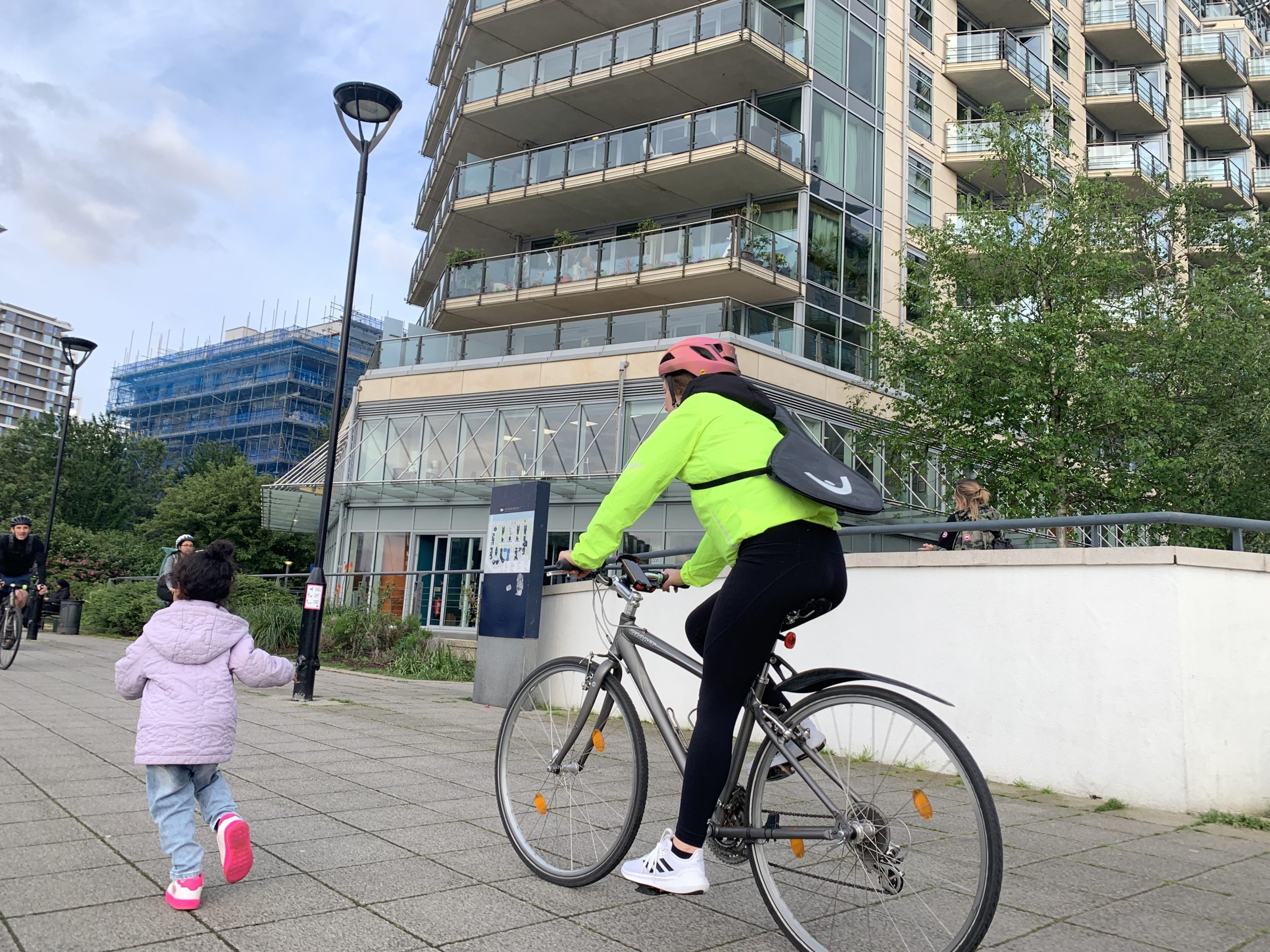
Participants can also include trackables with goals that can be followed as they move from location to location; users are encouraged to log and photograph geocaches so others can see where they end up. It’s a fun activity for individuals and groups alike, including children, and a great way to get people moving outdoors.Two people exercising - A small child running and an adult on a bike in an urban environment
AR eyewear for training

Many people like to know how they’re performing when they train, as evidenced by the staggering value of the global fitness-tracker market. which is projected to break the $62bn mark in 2024. Innovation is fast moving beyond the wrist, however, with AR eyewear increasingly making it easier for runners, cyclists and even swimmers to track performance.

Engo glasses, for example, can be connected to a watch or cycling computer so users can see their key performance measures in real-time, in their line of sight, and adjust their performance accordingly. 

Similarly, Finis smart goggles have an in-goggle display and activity tracker that provides swimmers with real-time feedback underwater. This can then be reviewed in the accompanying app and synced to other fitness apps such as Strava and Apple Health.

While these products have been designed for athletes and serious racers (with the price tag to match), like fitness watches they will no doubt become more accessible as demand increases and more products come to market. I wouldn’t be surprised if they are available to hire at gyms and swimming pools in future too.
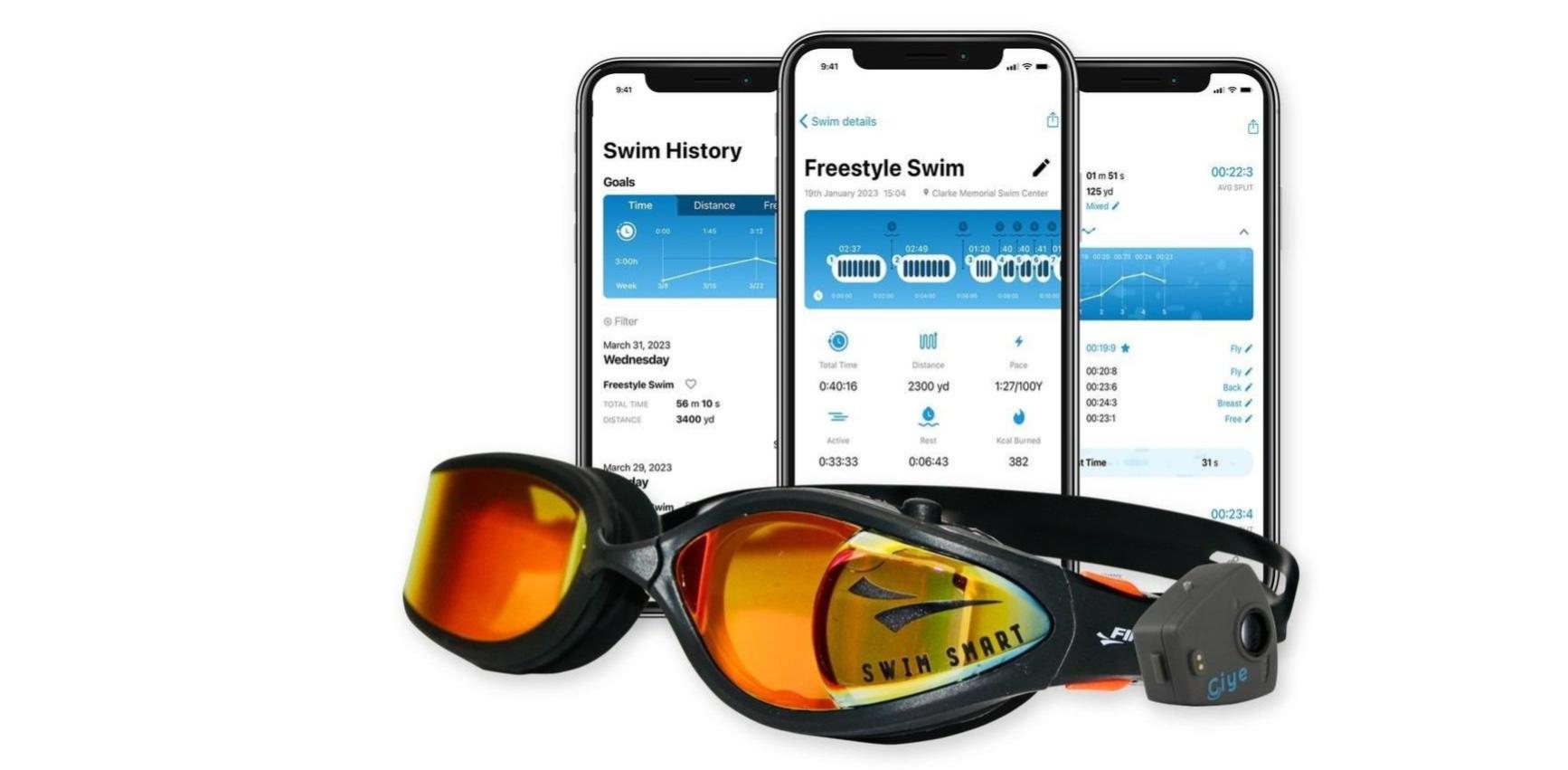
App screengrabs with exercise statistics and a pair of swimming goggles

App-based communities

I have touched on the benefits of community when it comes to movement and exercise. Apps and forums are a fundamental component of this, enabling people with similar interests to form communities wherever they are in the world.

Strava is a prime example of this, which is a social network and community hub for athletes – increasingly for runners, which was the must-uploaded sport on the app in 2023

In addition to the many features to help track and share athletic journeys, the app is a place to connect with other athletes, find motivation and explore new places. Users can also participate in virtual competitions and leaderboards, learn from other experts and follow other runners, including Olympians.

Strava’s 2023 Global Report reveals some interesting insights about what motivates users to exercise. While over half say setting a new goal helps and four in 10 like to plan a workout with friends, community is a key motivator. 

Runners (83%) and cyclists (53%) are more likely to get a personal record in a group of two or more than they are going solo. 77% of Gen Z athletes, meanwhile, say they feel more connected to others when seeing their friends’ or family’s activities on Strava. 

Further reinforcing the power of digitally enabled community and connection, this demographic was also the leading contributor to the 11% increase in new Strava Clubs last year.

Inclusive design and accessible environments

Digital placemaking has another significant role to play in promoting physical activity; it can help to ensure that public spaces are designed to be accessible to all.

Wayfinding apps and digital kiosks, for example, can be designed to support people to navigate parks and recreational areas – indoor and outside. They can signpost the nearest toilets and amenities, accessible pathways and routes, thus helping people to feel less anxious while out and about, whether walking, wheeling or running.
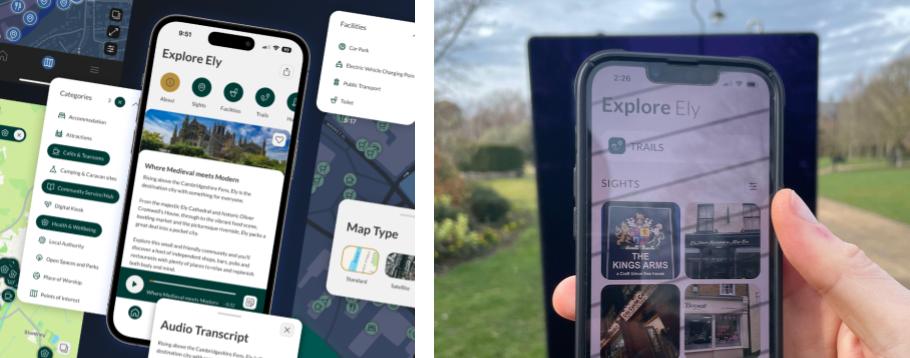
Two images: Explore Ely screengrabs, and a photo of the app on a phone and a kiosk.

Visit Ely is using the Place Experience Platform to provide facility information, route guides and directions to both their accessible public on-street digital kiosks and to personal devices.

More broadly, digital technologies are critical to enhancing the perceived safety of places. Various research shows that people feel less safe when alone in outdoor settings after dark. This is particularly true for women and disabled people, as evidenced by ONS research.

Features like smart lighting, contextually sensitive surveillance systems and emergency alerts can help to improve people’s feelings of safety when engaging in outdoor activities. 
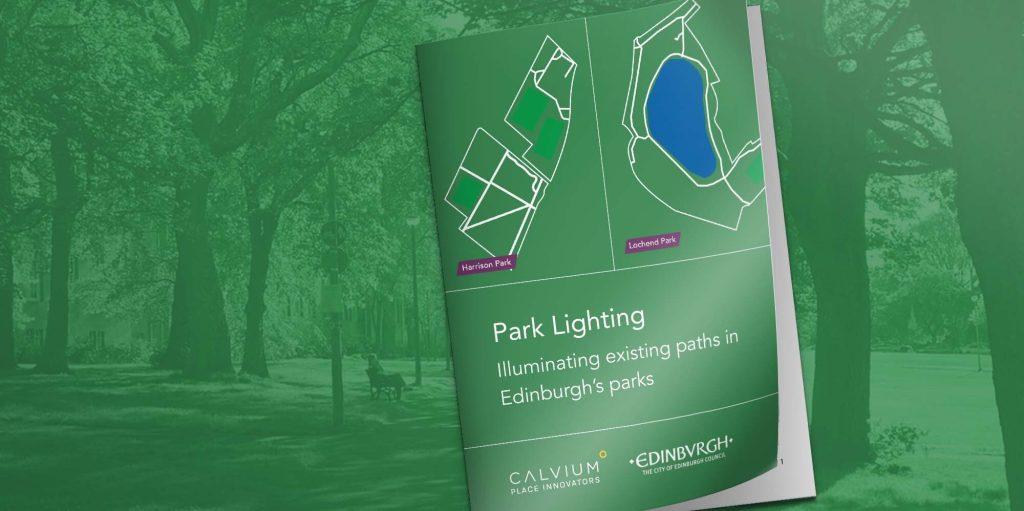
Report cover with photo of trees in a park behind. Report title 'Park lighting: Illuminating existing paths in Edinburgh's parks'

The City of Edinburgh Council commissioned Calvium to assess and recommend which of its 149 green spaces should receive sensitive lighting to encourage active travel here.

Final thoughts

The majority of us probably won’t ever reach the fitness levels of Olympic athletes, but if we aim to do at least 150 minutes of physical activity a week – as recommended by the UK chief medical officers – then it is important that we make it achievable, enjoyable and motivating.

The above examples demonstrate the power of digital placemaking to encourage people to move more, whether they are motivated by challenge, reward or connection. At the end of the day, if people feel good about what they are doing, they are more likely to do it. Here’s to more movement!

Aerial view of cathedral and city

How Visit Ely is harnessing digital technology to maximise visitor experience

By Place

In charge of a city bustling with history and culture, Visit Ely has been ramping up its digital offering to reach new audiences in a post-pandemic world. The tourist information experts have worked with Calvium to deliver an innovative digital placemaking experience on mobile apps and digital kiosks across the city.

On the cusp of completing the initial rollout, Visit Ely’s Sales and Events Officer, Matt Routledge, tells us how Visit Ely has adopted, adapted and evolved in recent years, and the importance of putting community at the heart of digital placemaking.

Can you give an overview of Ely and its local economy – where does tourism factor and what are the economic development strategies?

While it may not appear quite as sprawling as nearby neighbours Cambridge and Peterborough, Ely is a city. We have a sizable agricultural income and economy because of the nature of the fens. We are home to a number of production industries, including being the European home of international organisations such as Thorlabs. We also have a bustling town centre and tourism sector.

Tourism is a sizable element of the visitor economy throughout the summer and winter, and we have everything they need in one destination, such as accommodation providers, food and drink establishments, independent shops, markets, and unique visitor attractions, for example, Oliver Cromwell’s house. Residents and school visits certainly contribute, but it is tourism that provides a considerable cash injection to Ely’s overall economy.

As placemakers, a destination marketing organisation and visitor guides for the city, what are your key opportunities and challenges?

The biggest challenge is that we are in a very well-supplied market where there is a finite resource of time and money for people to enjoy leisure activities. They go hand-in-hand: if you have money, do you have time to spend it? If you have spare time, do you have money to spend? So to assert ourselves, we need to make our product appear top-of-list in front of people.

Fortunately, that isn’t enormously difficult when you have a resource, a product per se, such as Ely, which is filled to the brim with history and things to do. People travel all over the place for our markets, for instance, while our upcoming traditional apple and harvest fair attracts between 5,000-7,000 people in a single day.

Photo of street festival with large eel

Ely ‘Eel Day’ is a popular annual festival which includes a parade, led by a giant eel. The weekend event is an established attraction with music, games, stalls, Morris dancing and various other entertainments including competitions such as ‘eel’ throwing. Photo: Terry Harris.

Digital technologies are playing an increasing role in the lives of locals, visitors and potential visitors. How is this influencing the ways that these groups engage with Visit Ely and the city?

Digital technologies have created two almost defined streams of tourism. We have our traditional 50-65+-year-olds who engage with our print materials, want to see posters and still pop in to see us at the tourist information centre; then we have a newer, younger audience that are much better served and reached by digital platforms.

We’ve seen a need to move towards Facebook, X, Instagram, TikTok, and have had to adapt. We know that we are looking at a global audience and in the post-pandemic world, international travel is coming back with a renewed vigour. There is a desire to travel internally and internationally from markets that we may have not seen before. People are doing more virtual tours using a range of platforms, and then going to see places as a result of that. That’s also why Ely is on these platforms.

So, digital technology has had an enormous impact and will continue to have an enormous impact on how we drive business and in what basket we put our eggs.

What has been your strategy in providing local information through public access, as well as direct to personal devices?

This strategy – the development of a tourism app – dates back to the early days of the pandemic, where the economic development team at East Cambridgeshire District Council applied for funding from the combined authority. Because of the local roots the project needed to flourish, it made sense for it to sit under the Visit Ely banner.

That has influenced the initial campaign and structure of how we are going to engage, particularly in making sure the app isn’t just a boon for tourists. That was one half of it – giving tourists and potential visitors the opportunity to see all the things to explore in Ely via an app – but we also wanted local residents to benefit as much by letting them know what’s available, to defeat that kind of threshold anxiety that might exist. There is an ever present sense of “that isn’t for me” or “It’s of no use to me”, but once you get someone over that threshold, once they engage and see what is on offer they will hopefully become life-long users.

It has very much been something we’ve wanted the community to be at the heart of, so this has informed the content we show, like government buildings, the library or emergency dentist – things that your average visitor may not want or need.

Can you describe the Visit Ely app and its visitor experience?

We currently have around 326 local sites, services and places of cultural interest listed, ranging from dentists, museums and architects, to the cathedral, public transport and the ‘secret yarn bomber’ – a local resident who designs knitted tops for post boxes under a secret identity.

We have events, which we can geolocate so somebody gets a notification when walking past a specific place. Then there are the trails and quests, including wellbeing trails for Ely Country Park and the ‘Station to City’ trail, which seeks to bridge the gap between the city and train station, which can feel quite isolated.

We know people love gamification; if you can turn something into a challenge, adventure and experience, then you should. So our first quest is made up of 40 questions, leading people to look at and discover things they might otherwise miss.

More recently, we have started to roll out digital kiosks, which host a version of the app that is only available on the kiosks – which you don’t need a phone for. By the end of the project, we will have 17 kiosks in key prominent locations around the city, including the railway station, market, riverside and all car parks.

What value do you anticipate the app will bring to your city?

It will add value from a two-fold perspective. Economically, it will bring eyes that formerly would not have reached the city of Ely. Equally, it will support residents, local businesses and events that are taking place in this city to grow, develop and share themselves around the world and within our own little microcosm here.

We’ve had some incredibly positive reviews already, often saying it’s about time Ely was put on the map! I had an email from a lady who had lived in Ely for eight years, and because of the app she had gone on her first proper walk around the country park. She said it was revolutionary.

Visitors are enjoying it too because they are able to plan their visit and make the most out of it, rather than getting overwhelmed with choice anxiety.

What have you discovered/encountered working with digital technologies and information/content – has it changed the way you see future storytelling and visitor experiences?

We are on the cusp of something incredible developing from here and you cannot avoid it; you cannot outrun the future. So we are being faced with that redirection.

The app is the perfect example of that happening. We are taking that relevant information and transposing it to a new medium. We’re saying to people we are still here; the tourism office and printed visitor guide aren’t going anywhere but digital works harmoniously with it and they can be used to support each other. We have to be acutely aware of the change of tide of technology we adopt to adapt to evolve.

Are there any words of wisdom that you would pass on to other Councils or places seeking to create their own digital placemaking experiences?

Root it in your community and get that community buy-in from the beginning. Make it work for residents first, then it will grow and flourish because it is tended by those that know the soil, air and nutrients best. Let them plant the tree and grow with you.

We have made it a very open project and invited people to feed back and submit their own events. It’s about giving the community a sense of ownership; letting them know that their thoughts, wishes, feelings, desires, ideals and content is appreciated and not just paying lip service.

What are your plans for the future?

We are adding more content daily and would like to start doing more community-curated trails, letting those who know Ely best submit their own routes. They will be the lifeblood of this app.

It is still a very young idea but we’re so invested in it and there are so many branches that can spring from it… additional screens, new functionality on the app, itineraries. The wish list grows and grows, because if we are constantly improving the experience and keep giving people something to come back to, they will come back.


Thank you Matt for sharing your experience and insight!

Enhancing place engagement with augmented reality

By Place

Augmented reality is a familiar technology that has been creating new spatial experiences for many years now. To inform an AR project that I’ve been undertaking recently for Calvium’s Place Experience Platform, I decided to find out a bit more about augmented reality…

While early innovations in immersive reality were emerging just as The Beatles started rising to fame – the first VR mounted headset was developed in 1960 – it was undoubtedly Pokemon Go that took AR to the mainstream in 2016, carving out a lucrative space for AR as an entertainment experience.

AR has come a long way in the past decade alone, with increasingly sophisticated technology driving innovation to enable more immersive experiences and a greater connection to places. Whether for entertainment or education purposes, AR is being adopted by many to enhance storytelling – in journalism, theatre, museums, towns and cities. My particular interest lies in the ways that AR is being used to form new experiences for people in places, and a variety of examples follow.

Developer at office desk

The world’s first augmented reality city

Stirling in Scotland is currently undergoing a £200,000 transformation to become the first fully augmented reality city in the world. Part of the Scottish government’s Place Based Investment Programme, Stirling Council has teamed up with BT and global design agency Seymourpowell to bring the city’s history and heritage to life in a new AR environment.

The place-based app, dubbed Stirling XP, overlays key attractions with interactive information, graphics and 3D models, while interactive games will unlock rewards and incentives across the city. It is part of a wider ambition to raise Stirling’s profile on the international stage – particularly by tapping into the expectations of a younger generation looking for more immersive and digital experiences. Another key aim is to open up new opportunities for local businesses and boost the wider tourism economy.

We know that digital placemaking has become a key component of the visitor experience and has the potential to realise socio-economic benefits for a location. Neil Christison, VisitScotland’s regional director notes: “…tourism is a force for good with an impact that spreads far beyond the industry itself – it benefits our economy, our community and our wellbeing.” As a central pillar of place-based digital capabilities, investment in augmented reality can be an investment in the local economy.

Bringing history to life

AR is not only a powerful way to bring modern-day cities to life, it also has a great role to play in recreating places of the past. Zubr Curio’s Acropolis AR app, for example, allows visitors to the Acropolis of Athens to explore the ancient buildings as they would have appeared in the 5th Century, and walk the paths that connect them. The app is not only location specific, but also lets people enjoy the experience wherever they are in the world. By bringing a miniature 3D model of the Acropolis Hill to their living rooms, users can inspect the ruins as they appear today and reconstruct the monuments in AR, piece by piece.

Two computer generated images of the Acropollis, one in ruins and one complete

Images: Zubr Curio

The New York Times has used AR to recreate history in a slightly different way. As part of its experimentation with AR in storytelling and journalism, the publisher used photogrammetry – the process of taking overlapping photos of an object, structure or space and converting them into 3D digital models – to recreate a model of an historic Chinatown street in New York. Using over 4,000 images, users can explore archival photos of that space through the lens of AR – including a famous vintage dim sum parlour dating back to 1920.

Back in 2019, Calvium collaborated with Professor Fabrizio Nevola at the University of Exeter, Professor Donal Cooper at the University of Cambridge, the National Gallery and long-term partners Zubr to create Hidden Florence 3D: San Pier Maggiore. Using AR, the app places the user inside a reconstructed model of the Church at San Pier Maggiore in Florence that was destroyed in the 18th Century, and recreates the building around the altarpiece, which is currently situated in the National Gallery.

Adding a new dimension to fiction

Audio has been an incredibly popular extension of fiction for decades, with the first audiobooks dating back to the 1930s. So it makes sense that AR is being used to add another dimension to fiction and storytelling, creating immersive experiences that pique the imagination of both adults and children alike.

For example, Singapore’s Mint Museum of Toys’ series of AR story-colouring books for 4-12-year-olds encourages learning through interaction and creativity. Each book is based on collections from the museum, including one about a girl who grew up in 1920s Singapore, which tells a story of how this nation-state has progressed since then.

The University of York, meanwhile, has developed an immersive AR pop-up book to bring the story of Dracula to life. The 20-minute experience combines a ‘real world’ fine art pop-up book with immersive AR animations, with a tablet dressed as a ‘spirit detector’ inviting audience members to become part of Dracula’s reincarnation. The project hopes to eventually enable the development and testing of a location-based version that can be toured internationally.

Even closer to Calvium HQ in Bristol, Aardman Studios has created its first AR experience for Wallace and Gromit. The narrative-driven experience sees the world-famous duo take on a contract to ‘Fix Up’ Bristol and positions the player as a new employee of the company. They can interact in a variety of ways, including through AR gameplay and extended reality portals.

Fictioneers’ Richard Saggers, who worked on the project with Aardman, described it as groundbreaking work “which demonstrates the huge opportunity to evolve the way stories are told.” Saggers highlights the importance of having diverse, multidisciplinary teams, which is something Calvium certainly advocates for too!

Immersive theatre

The immersive nature of theatre means it is already very well-positioned to experiment with AR. The National Theatre spotted the opportunity early on and launched its own immersive storytelling studio back in 2016. The studio is designed to examine how emerging technologies such as AR can widen and enhance the company’s remit to be a “pioneer of dramatic storytelling and to enable an audience to stand in the shoes of another”.

One studio output includes a live AR performance of All Kinds of Limbo; people can buy a £6 ticket and watch it on their smartphone or tablet, wherever they are. This demonstrates the power of AR to make theatre more accessible too.

Professor Elizabeth Hunter’s theatre productions, meanwhile, use video games and AR headsets to place audience members in the perspective of a play’s characters. Bitter Wind: Greek Tragedy for Hololens, for example, puts users in the POV of the protagonist by overlaying their physical surroundings with digitally rendered versions of palace windows, torches and wall fragments.

Place Experience Platform evolution

Calvium’s Place Experience Platform (PEP), that I mentioned earlier on, is one tool that can give place managers the capability to put AR elements in a location, and then manage, update and expand on them. We are constantly looking to improve capabilities and expand our menu of experiences from which place managers can choose their feast!

We recognise the value of making AR scalable and accessible to everyone using our platform, which is why I am currently designing new elements that will be made available to all of the PEP customers.

Windmill Hill City Farm

To coincide with Halloween, we recently co-designed a new digital visitor experience for Windmill Hill City Farm. The 15-minute trail follows Dusty the ghost, who appears as an animated AR model and needs help finding their friends around the farm. We’ve created five fixed templates of different ghosts in the CMS, which can be customised to create individual trails and challenges around different sites.

Starting with an initial set of characters, each place can create their own site-specific experience from a ready-to-go toolbox. for personalising to their place. We see a huge opportunity to create more seasonal trails like this, including for Easter, Christmas and major peek holiday times. Moving forward, developments like this will be available to all clients as part of their subscription.

5 portrait phone-shaped images of a family members at a city farm with AR ghosts next to them

Calvium’s CEO Jo Reid tests the ghost hunt at Windmill Hill City Farm

Beckford’s Tower

A more complex, unique and bespoke project, our latest collaboration with Zubr is an example of a more complex, unique and bespoke project, which uses mixed media storytelling to enhance the historic site of Beckford’s Tower in Bath.

As this project was built using PEP, the curatorial team can continue to develop it once the project is over. There are so many stories to be told, which means place managers can produce and release new content over time; they can get user feedback, make changes, tie in releases with themed promotions and regional events. It’s a quick, cheap and easy way to update and keep visitor experiences fresh and relevant.

Final thoughts

As I’ve discovered, AR is no longer a novel and risky innovation; it is a must-have way to engage. In the context of place-based storytelling, AR can help draw out what is distinctive about your place. It can further enhance the craft, creativity and quality of storytelling, and deepen understanding of the unique local aspects of a place. AR as a technology is a common offer, but how you use it to lead people around your place and tune it into your particular context is what will make you stand out.

People expect a digital element to their place experience nowadays, and so a digital component, AR or otherwise, should be seen as a staple part of any placemaker’s toolkit. Not only do audiences enjoy digital experiences, it is a tried-and-tested way to boost engagement with a place, support a place’s brand and encourage repeat visits. A win-win for all!