All Posts By

pep_admin

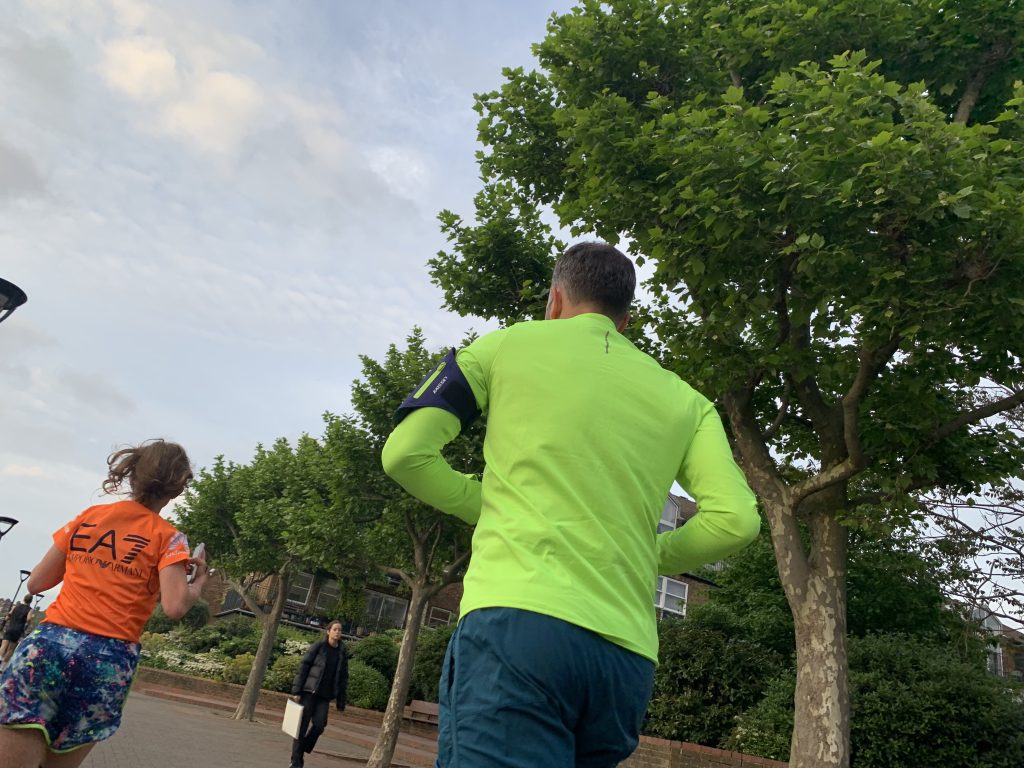
People jogging outdoors along a tree-lined path, with one person in a bright green running shirt in the foreground.

Digital placemaking: enhancing physical activity for health and wellbeing

By Place

The UK population is ageing steadily, with over-65s projected to make up a quarter of the population by 2050. While life expectancy in the UK has broadly increased, healthy life expectancy has not kept pace. This means many people are living longer in poor health. Moreover, ageing is not uniform: inequalities in health outcomes and access to services by gender, ethnicity, geography, and socioeconomic status shape how people experience later life (UK Parliament Briefing, Sept 2025).

Promoting regular physical activity, alongside a healthy diet, is one of the obvious yet essential ways to achieve and maintain better health, helping to improve quality of life and reduce healthcare costs, as well as address health inequalities across all demographic groups.

The key question for this article is – how can we make exercise more enjoyable and something people want to do?

This is where digital technologies come into play; placemaking, in particular, can support public health through sport and movement by leveraging technology to create more engaging, accessible and inclusive environments. There are examples of place-based technologies that are doing this well already, as I will examine below.
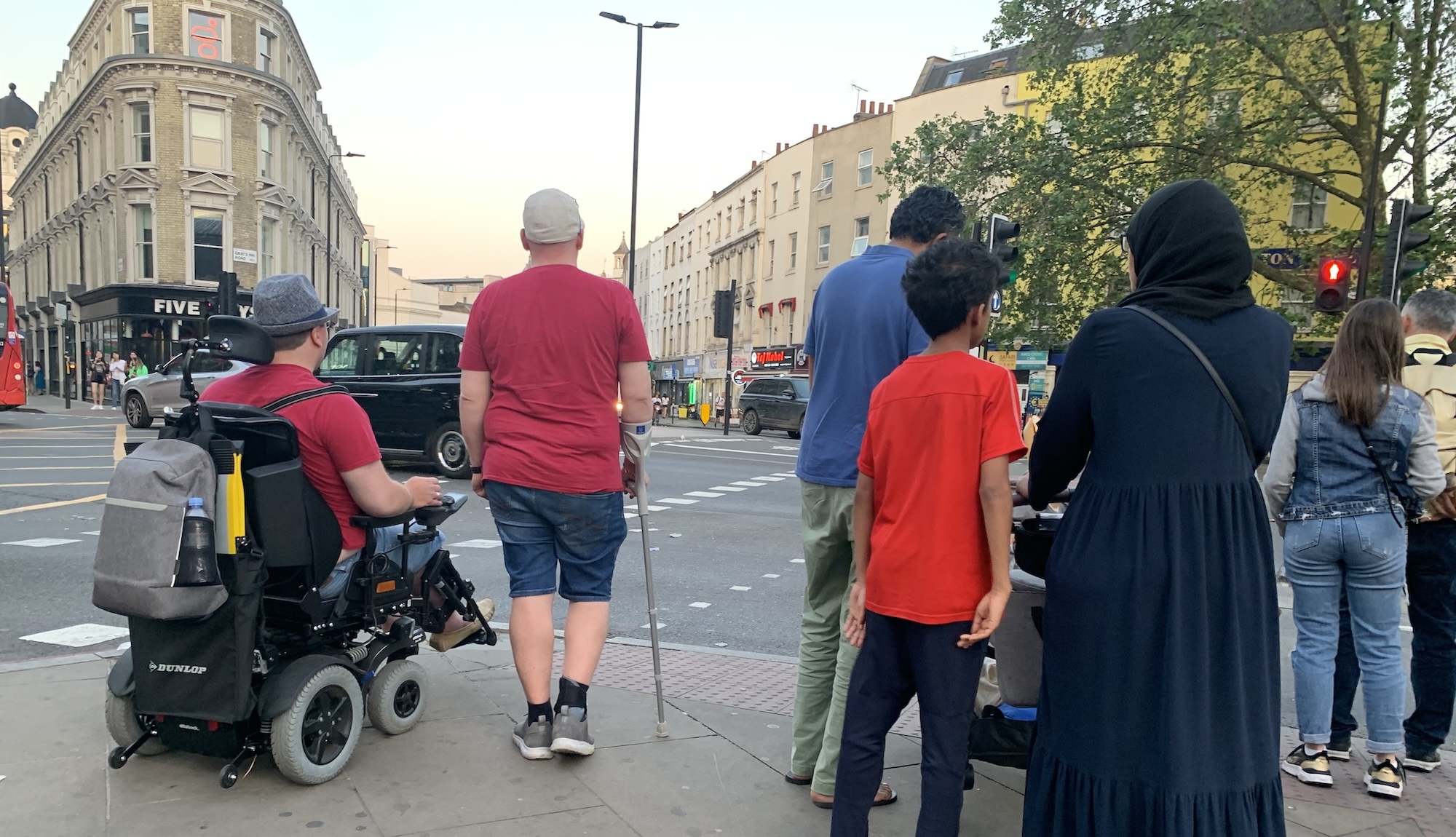
A variety of people waiting to cross a busy road, some with access supports - a pram, walking stick, wheelchair.

Incentive-based placemaking

Incentive theory is a psychological theory based on the notion that human behaviour is motivated by a desire for external rewards; money, recognition and promotions are a few examples of positive incentives that may encourage people to work harder and perform better.

It makes sense that this would translate well to physical activity, which we can see in the success of apps like Sweatcoin. The free step counter and activity tracker converts steps into a virtual currency, which can then be spent on a variety of products and services in a dedicated marketplace. This includes fitness gear and classes, as well as the option to donate to charity.

Importantly, the app has proved to have sustainable benefits on physical activity. Research from the British Journal of Sports Medicine showed Sweatcoin users’ physical activity increased by 20% over a six-month period. The report underlines the benefits of the app in allowing people to look back and feel good about their achievements, rather than setting future goals, which if not achieved, can have negative effects on motivation.

This further highlights to me the need to change the rhetoric around exercise and movement. Rather than shaming people into exercise and making them feel bad for not doing so, the emphasis needs to be on the benefits of exercise and how it can improve quality of life. It is also about making exercise seem less of a daunting task and more accessible, which apps like Sweatcoin are doing by not only rewarding long runs but any kind of step-based movement. 

Collective movement

It is a common misconception that exercise has to be strenuous to be beneficial. This next project challenges that assumption, instead demonstrating how creativity can promote health and wellbeing in a fun and sociable way.

Compose is an interactive projection that allows people to take part in a collective performance exercise. It works by using a step-on-a-dot interface inviting the public to make music and dance together. There are 37 dots labelled with distinct graphics associated with different musical partitions; different dots are available to play at different times, encouraging different types of movement and exploration across the space.

Moreover, it is about bringing the community together, which is powerful in itself. Not only for community cohesion; research has shown that human behaviours spread socially, including how much people exercise, and that social relationships play an important role in encouraging healthier habits.
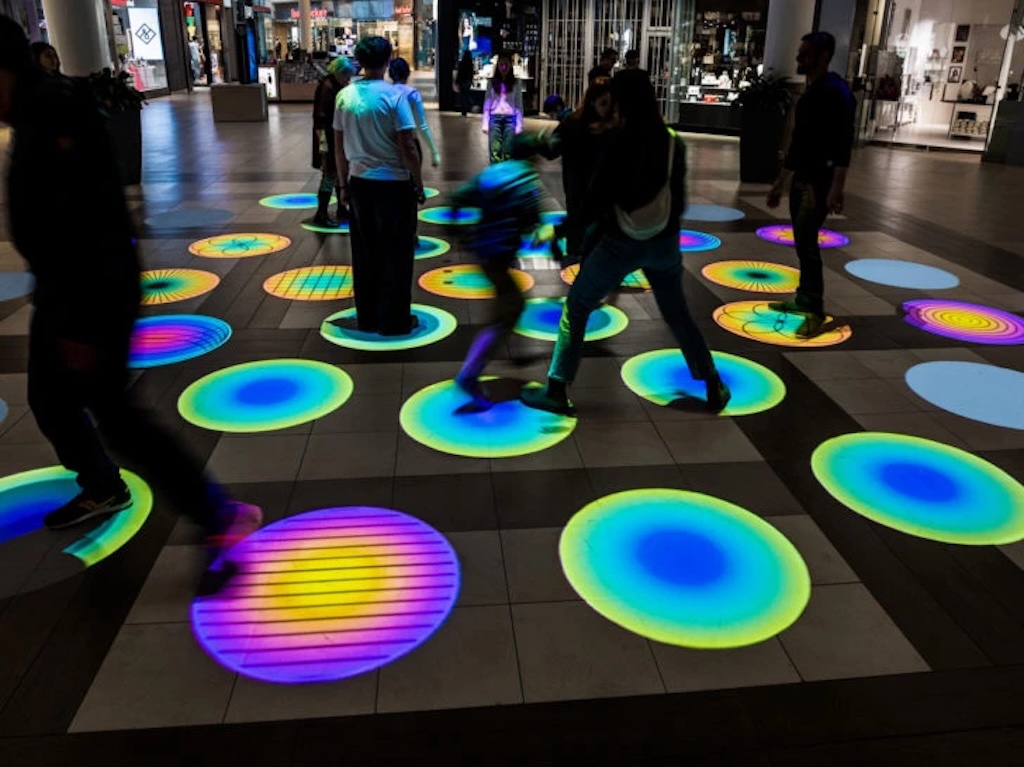
Photo of people jumping on rainbow coloured lights on the floor in a dark shopping mall.

Interactive shopping centre artwork, Laval, California. Photo: Daily Tous les Jours

Virtual challenges

Similar to rewards and incentives, challenges can make physical activity more fun and engaging, thus motivating people to move more.

The Conquerer app, for example, has a variety of digital fitness challenges within public spaces, which can be completed by running, walking or cycling in any time-frame, individually or in teams. Some of the virtual challenges on offer include the English Channel, Angkor Wat, Star Trek and Harry Potter, which are all of varying distances and appeal to different interests and goals.

The app is also geared towards organisations looking to boost health and wellness programmes. Companies can create team-building events and workplace competitions, as well as customised challenges with specific milestones and engagements. This harnesses the benefits associated with both incentive-based and collective movement, and is an effective way to promote healthier habits on a mass scale.
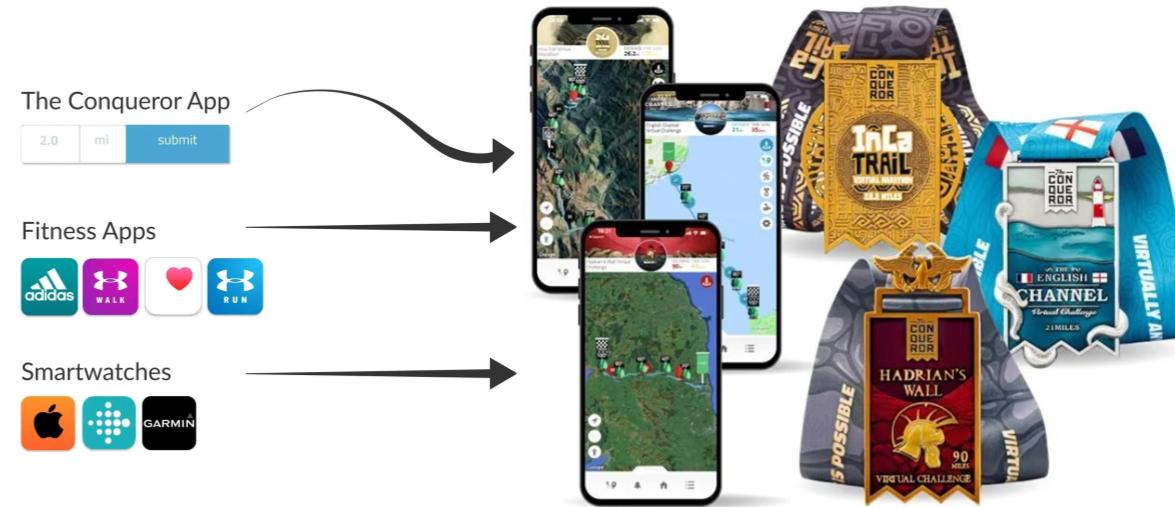
Screengrabs from the Conqueror app, along with badges for three quests, and other health tools that it can integrate with such as Adidas app and Apple watch

Geocaching

Billed as the world’s largest treasure hunt, geocaching is an outdoor recreational activity in which people use their smartphone GPS to find nearby geocaches. These caches are created and hidden by other users at specific locations, often disguised as everyday objects so that people engage with their surroundings and not just through their phones.

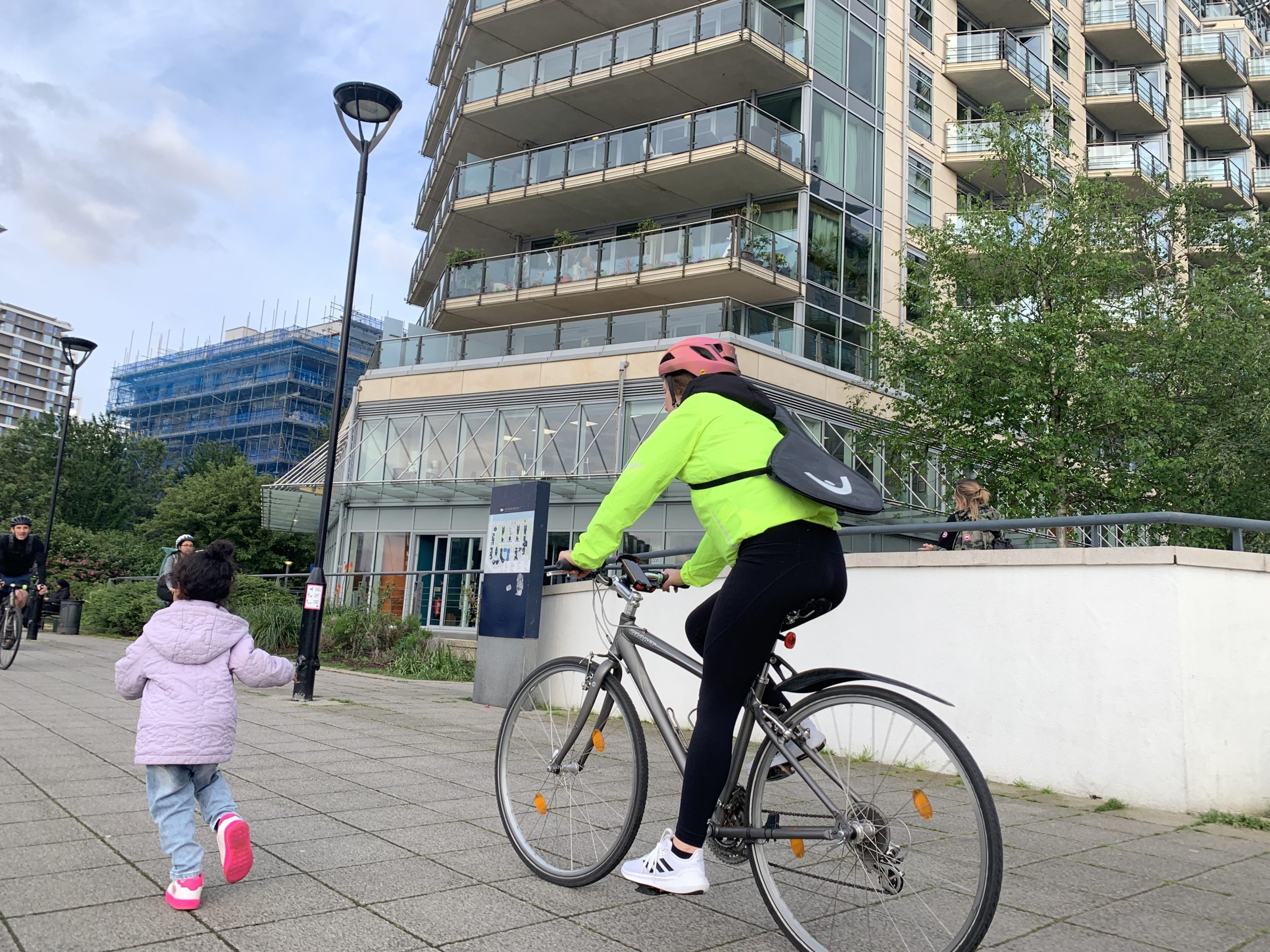
Participants can also include trackables with goals that can be followed as they move from location to location; users are encouraged to log and photograph geocaches so others can see where they end up. It’s a fun activity for individuals and groups alike, including children, and a great way to get people moving outdoors.Two people exercising - A small child running and an adult on a bike in an urban environment
AR eyewear for training

Many people like to know how they’re performing when they train, as evidenced by the staggering value of the global fitness-tracker market. which is projected to break the $62bn mark in 2024. Innovation is fast moving beyond the wrist, however, with AR eyewear increasingly making it easier for runners, cyclists and even swimmers to track performance.

Engo glasses, for example, can be connected to a watch or cycling computer so users can see their key performance measures in real-time, in their line of sight, and adjust their performance accordingly. 

Similarly, Finis smart goggles have an in-goggle display and activity tracker that provides swimmers with real-time feedback underwater. This can then be reviewed in the accompanying app and synced to other fitness apps such as Strava and Apple Health.

While these products have been designed for athletes and serious racers (with the price tag to match), like fitness watches they will no doubt become more accessible as demand increases and more products come to market. I wouldn’t be surprised if they are available to hire at gyms and swimming pools in future too.
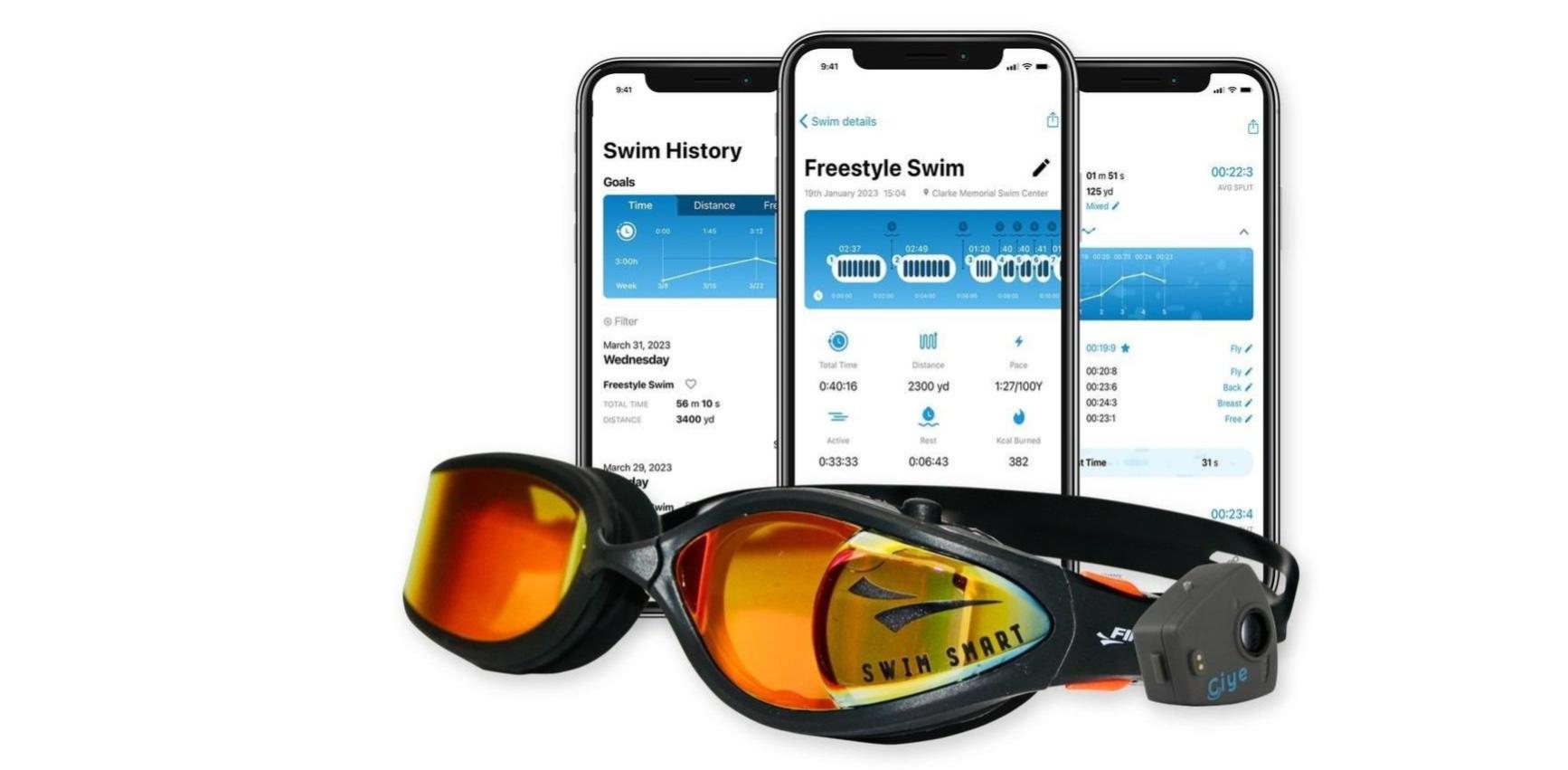
App screengrabs with exercise statistics and a pair of swimming goggles

App-based communities

I have touched on the benefits of community when it comes to movement and exercise. Apps and forums are a fundamental component of this, enabling people with similar interests to form communities wherever they are in the world.

Strava is a prime example of this, which is a social network and community hub for athletes – increasingly for runners, which was the must-uploaded sport on the app in 2023

In addition to the many features to help track and share athletic journeys, the app is a place to connect with other athletes, find motivation and explore new places. Users can also participate in virtual competitions and leaderboards, learn from other experts and follow other runners, including Olympians.

Strava’s 2023 Global Report reveals some interesting insights about what motivates users to exercise. While over half say setting a new goal helps and four in 10 like to plan a workout with friends, community is a key motivator. 

Runners (83%) and cyclists (53%) are more likely to get a personal record in a group of two or more than they are going solo. 77% of Gen Z athletes, meanwhile, say they feel more connected to others when seeing their friends’ or family’s activities on Strava. 

Further reinforcing the power of digitally enabled community and connection, this demographic was also the leading contributor to the 11% increase in new Strava Clubs last year.

Inclusive design and accessible environments

Digital placemaking has another significant role to play in promoting physical activity; it can help to ensure that public spaces are designed to be accessible to all.

Wayfinding apps and digital kiosks, for example, can be designed to support people to navigate parks and recreational areas – indoor and outside. They can signpost the nearest toilets and amenities, accessible pathways and routes, thus helping people to feel less anxious while out and about, whether walking, wheeling or running.
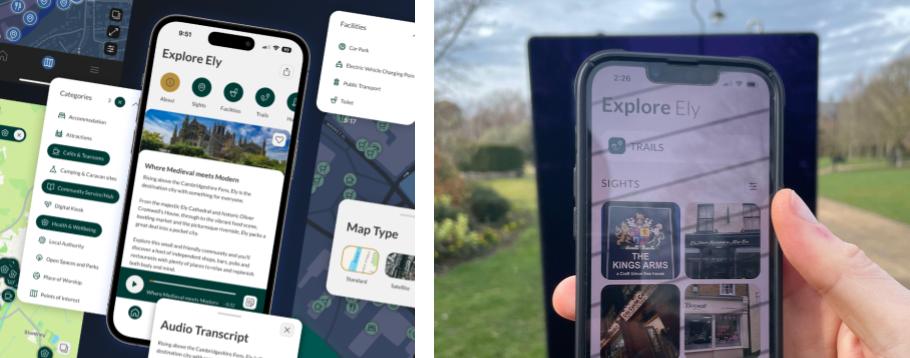
Two images: Explore Ely screengrabs, and a photo of the app on a phone and a kiosk.

Visit Ely is using the Place Experience Platform to provide facility information, route guides and directions to both their accessible public on-street digital kiosks and to personal devices.

More broadly, digital technologies are critical to enhancing the perceived safety of places. Various research shows that people feel less safe when alone in outdoor settings after dark. This is particularly true for women and disabled people, as evidenced by ONS research.

Features like smart lighting, contextually sensitive surveillance systems and emergency alerts can help to improve people’s feelings of safety when engaging in outdoor activities. 
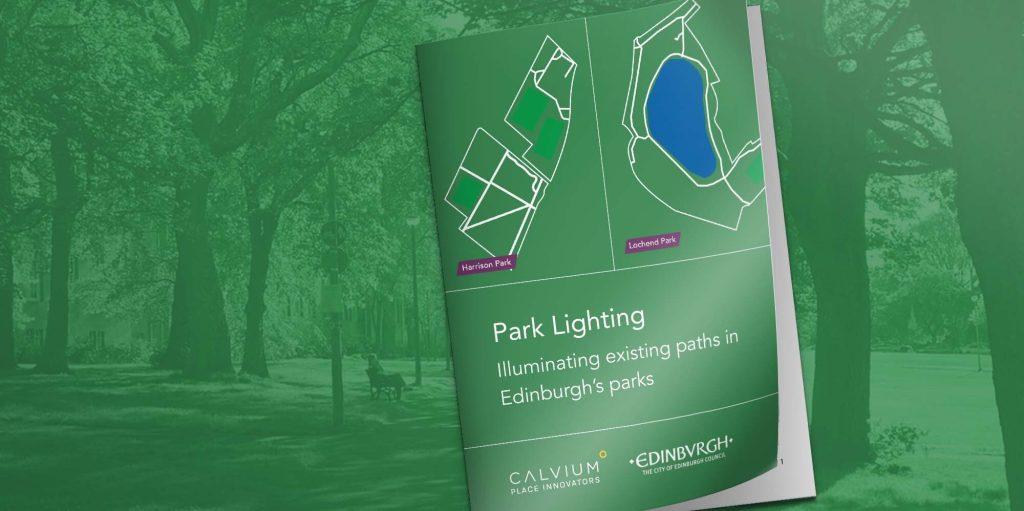
Report cover with photo of trees in a park behind. Report title 'Park lighting: Illuminating existing paths in Edinburgh's parks'

The City of Edinburgh Council commissioned Calvium to assess and recommend which of its 149 green spaces should receive sensitive lighting to encourage active travel here.

Final thoughts

The majority of us probably won’t ever reach the fitness levels of Olympic athletes, but if we aim to do at least 150 minutes of physical activity a week – as recommended by the UK chief medical officers – then it is important that we make it achievable, enjoyable and motivating.

The above examples demonstrate the power of digital placemaking to encourage people to move more, whether they are motivated by challenge, reward or connection. At the end of the day, if people feel good about what they are doing, they are more likely to do it. Here’s to more movement!

Certified B Corporation logo displayed on a circular gradient background in blue and gold tones.

Calvium: certified B Corp

By Place

In the UK, Small and Medium-sized Enterprises (SMEs) account for 99.8% of the business population, account for three-fifths of the employment and around half of turnover in the UK private sector. In addition to these social and financial impacts, on average each UK SME emits 15 tonnes of CO₂ annually (1–6 tonnes per employee).

At Calvium, we take our impact responsibilities seriously. In addition to being committed to Net Zero as a business and our membership of SME Climate Hub, we are now thrilled to be a certified B Corp. This acknowledges our sustainability actions and efforts, and includes us in a global community of businesses working for positive change.

What is a B Corp?

B Corp certification is awarded to companies that meet high standards of social and environmental performance, accountability, and transparency. B Corps are also legally committed to bringing benefit not just to shareholders, but all business stakeholders — workers, customers, communities, and the environment. The B stands for Benefit for all. 

Having B Corp certification is evidence of our business values and practices, and also connects us to other suppliers and clients who share our priorities.

“Hugely proud that Calvium is now a certified B Corp! Great to see the hard work and considered actions of the team result in this accreditation, demonstrating our high standards in social and environmental impact.”

CEO Jo Reid


Why B Corp?

Our vision at Calvium is to deliver innovations for meaningful user, societal, environmental and business impacts, and B Corp certification demonstrates progress towards this vision. It also  gives our project partners and clients evidence of our social value and sustainability activities, which are increasingly important to public sector partnerships and leading business practice.

The ethical business ecosystem is blooming, and there are more and more accredited B Corporations keen to work with each other to further embed ethical and sustainable practices into the core of the business community. We are pleased to be contributing our skills to progress this positive movement.

What is required for B Corp certification?

B Corp Certification is a designation that a business is meeting high standards of verified performance, accountability, and transparency on factors from employee benefits and charitable giving to supply chain practices and materials processing. In order to achieve certification, a company must: 

  • Demonstrate high social and environmental performance by achieving a B Impact Assessment score of 80 or above and pass a risk review. 
  • Make a legal commitment by changing corporate governance structure to be accountable to all stakeholders, not just shareholders, and achieve benefit corporation status if available in their jurisdiction. 
  • Exhibit transparency by allowing information about their performance, measured against B Lab’s standards, to be publicly available on their B Corp profile on B Lab’s website.  

Key points from the application process

For those looking into gaining accreditation, the assessment process steps through five criteria, and scores activities against areas of Governance, Workers, Community, Environment, and Customers.

Our company culture and organisational structure not only satisfied a number of assessment criteria up front, but has also recently made us a finalist for three awards – Best Agency to Work For at the Company Culture, British Data and SPARKies awards!

From the outside, the B Corp application can look intimidating, but once underway, the process is clear and support is available. In our experience, the B Corp team has been very helpful and friendly throughout.

Gathering evidence for the submission is essential, and our existing good internal business processes, including from ISO 27001 certification, gave us a head start. Positive intentions are also required – B Corp isn’t a mark of perfection but of continuous improvement. Every category in the application requires evidence proving applicants are actively making the changes they claim, and plans for future changes.

Three main tips we would share with businesses thinking about applying for B Corp certification:

  • Be clear on the ethical purposes and practices at the heart of your business, and have an appetite to always improve.
  • Every stage of application requires evidence – document everything!
  • Whatever the processes and assets within a company (e.g. people, suppliers, assets) consider them from different angles to look for opportunities for improvements.

There were some aspects of the application that we hadn’t needed to consider before – and it was helpful to give some time to discuss and respond to them. 

One was around balancing wages and employment responsibilities based on the country of employee residence. The aim of this criteria is to promote fair wages for international employees, rather than outsourcing work to reduce payroll burdens and employment responsibilities. Although our international colleagues are already all fairly paid and highly skilled, these international balancing calculations still took us a little while to equate, as we currently work with contractors and employees in the USA, Spain and Portugal, as well as the UK.

Challenges and continuous improvement

Over the past few years we have transitioned from an office-based company to a wholly remote working company, which has made measurement baselines tricky to set. The prime challenge didn’t lay in radically changing our practices – the challenge was in formalising the impact of our daily processes and activities. 

Working in the innovation space, we are familiar with working with change and flux, and even in areas where we scored highly, we continue to think about how we can make improvements.

Our best score was for working with customers – judged as excellent in process and policies. We also scored highly in the section on Governance. Having ISO 27001 and ISO 9001 certification, we were already a good way there, but quality criteria also apply to suppliers and our people, as well as our processes. 


“It’s taken time and care to measure our work against the multiple B Corp criteria  – to define appropriate baselines, record improvements, and then collate the evidence. Achieving their exacting standards is both satisfying and energising! It’s been a really useful process to explore broader impacts of our business activities, and to demonstrate how we are delivering on our core business values.”

COO Roisin Alvy


Going for B Corp certification has served as an excellent process to review our practices, sharpen where necessary, and collect evidence. This means we now have a fully informed base level on which to make plans for further improvements.

Next steps

B Corp Certification isn’t the final step to being a ‘good’ business: it’s just the beginning of a journey. To maintain certification, B Corps are re-assessed by B Lab’s standards every three years — standards that themselves are evolving and improving. Within that time, Calvium’s culture of continuous improvement means we are already looking at how to improve our practices further to improve our impact – and for a higher score in three years time! 

For example, we will be looking to increase training inside the company, focus on greater local impact, connecting with sustainable suppliers, reducing our carbon footprint, increasing our volunteering, and contributing to local communities and social initiatives.

As well as providing us with a widely acknowledged accreditation, the certification process has also helped us reflect on our business direction and supported us to plan detailed steps towards our sustainability goals.

B Corp certification isn’t a judgement on being perfect, it’s more a marker of positive intent, considered actions and demonstrable progress.

We are committed to continual improvement and making positive change for people and the planet. It is fantastic to have this officially recognised with B Corp certification, and we look forward to making further impact with partners who share these goals.  

[calviumPullout]Contact Calvium to connect with a B Corp certified digital partner.[/calviumPullout]
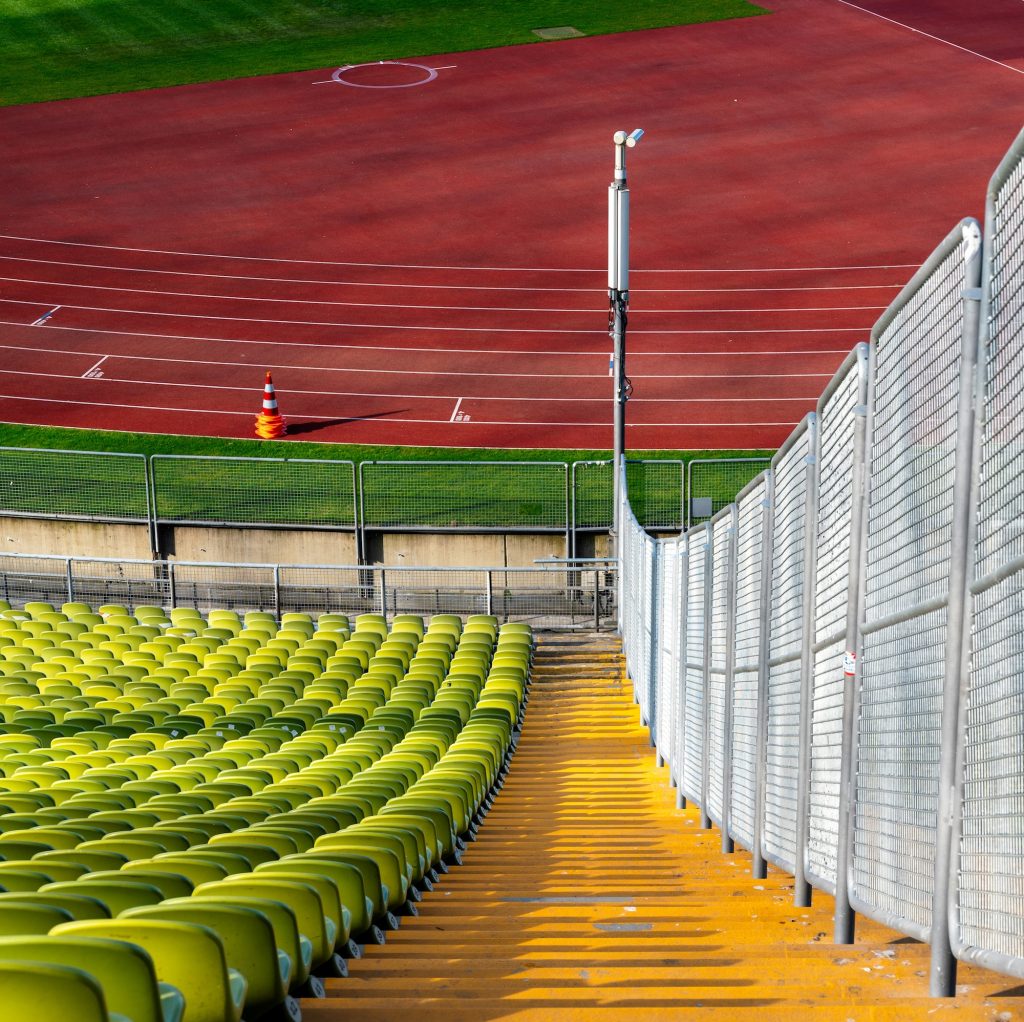
View down steps next to seating, looking to an athletics track, showing accessibility obstacles.

Design, accessibility and innovation – interview with Marina Logacheva

By Place

Marina Logacheva is a disability advocate and Disability Sports Lead at creative agency MATTA. She is also co-founder of adaptive fashion brand FAST, and an accomplished handcyclist.

Marina became a tetraplegic wheelchair user at the end of 2020 following a traumatic fall. In this interview, Marina discusses some of the barriers she faces as a wheelchair user, the journey to achieving greater accessibility in sports, and how she approaches sustainability and innovation as an entrepreneur.

Photos and job titles of Marina and Dr Jo Morrison.You’ve always been a keen athlete, and are now an accomplished handcyclist based in London, travelling internationally. What is your general experience like when travelling?

There are many barriers, but I try to stay positive. If I were to start describing everything at once it could be overwhelming for people to hear, especially those unfamiliar with disability. When people have never experienced even a temporary disability, like a broken leg, they can find the realities of a disabled person’s experience too daunting and avoid the topic entirely – which is why it’s important to introduce the subject in stages.

One of the biggest issues I face, especially when travelling for competitions, is the lack of basic accessibility and awareness. In terms of environmental barriers, toilets are a constant challenge; venues may claim to have accessible toilets, but the doors are too narrow or the set-up unusable. This applies to trains, hotels and stations too. As a wheelchair user, every curb and pavement angle affects my mobility, making navigation another persistent hurdle.

More transparency is needed; if a venue doesn’t have accessible toilets, simply noting that on their Google listing would help people to plan accordingly. During a recent handcycling World Cup in Italy, although infrastructure wasn’t always accessible, I appreciated people’s openness and curiosity. Locals offered to carry me up stairs or find ways to help me shower in inaccessible Airbnbs. That willingness to help in difficult circumstances made a real difference.

Marina celebrating, holding a sports jumper and flowers in 1st place at a handcycling podium.

Marina’s experience travelling for handcycling competitions has included a wide breadth of accessibility provision.

There’s also a major social barrier: a lack of understanding and disability etiquette. Regardless of setting, I often encounter awkward or uninformed behaviour; not out of malice, but ignorance. It’s important that people educate themselves on how to interact respectfully with those who have disabilities. A bit of curiosity, learning and awareness goes a long way.

How do those barriers compare with the sporting venues and events you attend?

Because disabilities are so diverse, achieving full accessibility at sporting venues is always a challenge. Every individual has different needs – whether it’s a wheelchair user, someone with a limb difference, low vision or neurodivergence – so it’s hard to meet all requirements without thoughtful planning. Too often, venues fail to provide adequate seating, ticketing options or inclusive experiences for fans with various needs.

The solution isn’t complex but it requires effort. Consult people with disabilities, involve wheelchair users, blind individuals, or neurodivergent people as accessibility consultants. Let them evaluate and design venues, and offer practical feedback. This is something many event organisers overlook, even at major stadiums or concerts, where basic navigation and accessibility could have been improved with just a little more planning.

  • See below for resources supporting inclusive space design, such as Design for the Mind: Neurodiversity & the Built Environment – British Standards PAS 6463.[/calviumPullout]

What empowers you to travel and participate in sporting events?

Before becoming a wheelchair user, I was spontaneous; I could book a flight in the morning and leave by afternoon. Now, every trip requires detailed planning. I have to call airlines to check if they can accommodate my wheelchair, ensure taxi drivers can transport it, and verify accommodation accessibility. Even basic things like accessing a shower or navigating a flat require confirmation, as “accessible” often means different things to different people.

Driving brings its own challenges. I once asked ChatGPT how many toilet stops I could make en route to Italy. I rely on tools like Google Maps, which now includes some accessibility features, but the information isn’t always reliable. Places may claim accessibility and fall short, or not mention it at all, requiring calls and extra checks.

Although some startups are working on accessibility-focused navigation tools, there’s no single reliable source where all necessary information – such as toilet access, step-free routes, or nearby facilities – is available. Instead, I juggle between apps, phone calls, and user-uploaded photos, which is time-consuming and exhausting. For many people, that uncertainty around planning can be overwhelming, which is where a centralised, accurate accessibility resource would make a huge difference.

From your position at MATTA, how is the accessibility of sporting events changing?

The accessibility and visibility of adaptive sports is evolving. At a recent event in Lausanne organised by MATTA and Changing the Narrative, parathletes, charities and federations gathered to discuss these changes. A key positive shift is the integration of adaptive sports with mainstream events like the Olympics. When Paralympic and Olympic events occur side-by-side, fans are more likely to attend out of curiosity and discover the excitement of adaptive sports.

Another significant change is the rise of digital broadcasting. Livestreaming on platforms like YouTube and Facebook increases access and drives interest; the more viewers there are, the more likely it is that brands and sponsors will invest in disability sports. 

A challenge, however, is that the sporting federations that organise events for people with disabilities rarely have the money to spare on advertising and promotion. It becomes a vicious circle where brands need to see viewers to invest, but organisations don’t have the money to promote their events to get viewers.

As with women’s sports several years ago, para sports are at a pivotal stage. With the right support and awareness, they can grow into equally celebrated and widely supported disciplines, offering athletes the recognition and opportunities they deserve.

Large crowd cheering in a brightly lit stadium during a para sports event

Promotion, public engagement and investment are key to the development of para sports. Photo: Andril Solok

There isn’t a one-size-fits-all solution for every sport, but collaboration and preparation are key to creating more inclusive events. First, location is crucial. If an event is held in a remote or unfamiliar area, people are less likely to attend. But if it’s in a central, well-known and accessible venue, more people will come. Accessible, high-traffic locations naturally increase visibility and participation.

Another powerful tool is celebrity advocacy. If well-known athletes or influencers use their platforms to publicly support or attend para sports, it can spark media interest and public curiosity, motivating fans to attend and helping to normalise and elevate disability sports. 

For disabled spectators, access remains a major issue. There are often limited wheelchair spaces, and accessible ticketing and infrastructure still fall short.

Moreover, accessibility information is rarely visible or comprehensive. People with different needs require clear, detailed information on venue access, navigation and support services. More transparency and budget allocation for accessibility could help attendees feel confident that venues can accommodate them. 

The recently-introduced European Accessibility Act should inspire positive change as well – not just accessibility in terms of the environment, but also digital accessibility and training; all the parameters that will make a difference to disabled spectators.

What best practice have you encountered regarding accessibility and venues?

I recently attended a concert at Ovo Arena Wembley and it was the best accessibility experience I’ve had. Everything from parking to navigating the venue was smooth and welcoming, and staff were trained, friendly and well-informed. 

I loved the new app created by Wheelchair Football Association (you can download it on iOS and Android platforms). It provides an amazing platform to share livestreaming, and match day scores, including commentator comments. And the most important thing it can be replicated for other para sport federations and adapted sport event organisers, to enhance viewership of their events!

Nimbus Disability provides a seamless B2B integration with venues and ticketing providers, which allows for better event planning and experience of people with disabilities.

There is, however, a lack of dedicated apps to enhance the accessibility of sporting venues. Different events require different navigation setups, so having up-to-date information (e.g. real life navigation within the venue) easily accessible would be invaluable. Many people may not wish to disclose their disability, so being able to review accessibility features in advance is essential – for example, photos, videos and detailed descriptions would help users assess whether facilities meet their needs.

In addition to your work at MATTA, your volunteering and of course your sporting life, you’ve also co-founded FAST, an adaptive clothing brand. As an entrepreneur, how do you approach innovation and sustainability?

As a small fashion startup, sustainability and innovation look very different compared to larger brands. In my case, sustainability means creating adaptive clothing with durable, high-quality materials that withstand frequent washing without losing color, shape or fit. It’s about investing in garments that last and bring long-term comfort and functionality.

Innovation is deeply rooted in feedback. With a background in marketing and product development, I approached fashion similarly. I asked customers what they wanted: where they prefer pockets, what colours they like, what garments they need. Function came first, and then I worked with a designer to make the clothes stylish as well.

However, adaptive fashion presents a unique challenge. Disabilities are diverse, and not everyone needs the same adaptations. While my designs work well for a certain group, scaling remains difficult. The more specific the adaptation, the smaller the niche.

To grow, I’m researching with others in the community to explore how to make designs more broadly inclusive and serve a wider audience. Shifting the focus from disability-specific to universally accessible design could help expand the customer base while maintaining function and style. The goal is to stay true to adaptive needs while making the brand more scalable and accessible beyond a narrow niche.

Photo of inside a sports stadium with race track, seating, sports equipment, and three stewards.

Photo: Harding Ferrent

The profile of disabled sports is rising, and getting attention beyond the Paralympics. What networks and organisations are doing great work to increase accessibility for sports, and more widely?

I’m really grateful to be engaging in wider industry discussions now, though it’s taken about a year to get to this point. A recent milestone was a MATTA event in Switzerland, organised in collaboration Changing The Narrative.

There are promising developments elsewhere. I’m working with a few fitness and sports networks to organise events that promote disability sports. Meanwhile, organisations like Access Sport are doing important work promoting para sports, particularly for disadvantaged children. Though their focus isn’t exclusively on disability, they’re raising awareness and helping brands recognise the value of investing in para sports.

Despite this progress, this area remains largely unrepresented across agencies and brands. But as more organisations, charities and initiatives come together, sharing knowledge and forming collaborations, momentum is building. Increased awareness and storytelling through interviews, events and written features are helping create space for disability sports in mainstream conversations. I hope more partners and professionals will soon join the effort so this work doesn’t feel like such a solitary journey.


Thank you Marina for sharing your insights and being such an inspiring person. During our conversation I thought of various related projects or frameworks which are shared below: 


Person wearing earphones and a blazer looking at a smartphone outside a red phone booth, with a blurred red bus in the background.

Accessibility for apps: best practices, processes and perspectives

By Place

In the UK, at least 1 in 5 people in the UK have a long term illness, impairment or disability, ranging from visual, hearing and motor (affecting fine movement) to cognitive, which affects memory and thinking. Globally, it is estimated one in six people experience significant disability, according to the World Health Organisation.

Despite this, there is a significant digital divide when accessing the internet with a majority of websites having accessibility errors – WebAIM’s 2025 accessibility evaluation detected basic accessibility failures on 94.8% of the home pages for the top 1,000,000 web sites. This limits people’s ability to access and engage with a wide range of products, services and information.

But the concept of accessibility does not just apply to disabled people; according to the UK Government, it is about making sure services can be used by as many people as possible, considering different needs at different times and in different circumstances. Failing to do so may mean you are breaking the law.

Person showing a phone screen to someone with Down's Syndrome.

Photo: Nathan AndersonThe Government Digital Service’s head of accessibility, Alastair Duggin, says it is a lack of awareness that most commonly results in things being inaccessible, and that our understanding of accessibility may be too narrow.

“When I talk about accessibility, I’m using it to mean that people are not excluded from using something on the basis of experiencing a disability. Accessibility means that people can do what they need to do in a similar amount of time and effort as someone that does not have a disability. It means that people are empowered, can be independent, and will not be frustrated by something that is poorly designed or implemented.”

The Arts Council England’s new access scheme for creativity and culture in the UK, All In, is a shining example of Alastair’s definition of accessibility. The initiative seeks to increase access to culture for deaf, disabled and neurodivergent people via a digital membership scheme, which has been designed to make all aspects of the booking process more accessible.

At Calvium, we design with accessibility front of mind, and as a standard process every project undertaken has an accessibility audit to ensure we are meeting essential accessibility requirements – and that we are continually improving. With that in mind, this blog will discuss how we approach digital accessibility and highlight key considerations for good practice.

3 screengrabs of apps on a smartphone, and an events web page. they show a range of settings and preferences options, text, audio and images for information access in different formats, and different types of search filters.

These interface design examples show a range of accessibility features, from dark modes to alternative filtering options.

Common digital accessibility issues

The broad spectrum of disability means there are multiple factors to consider when approaching disability and producing websites and apps. For example, fonts and colour contrast can cause issues for people with visual impairments. So can unstructured headings, a lack of image alt text and inaccessible documents, as assistive technologies like screen readers rely on them.

Video content is often uploaded without transcripts or subtitles, which renders it inaccessible to people with hearing impairments and screen readers. While people with motor disabilities can find it difficult to use a mouse or keyboard in the same way, websites may be too busy or complex for people with neurological conditions such as autism. Flickering images and animated backgrounds can trigger seizures for people with photosensitive epilepsy.

Websites do have accessibility guidelines (WCAG 2), but there is not much specifically for apps. In lieu of established guidelines, Calvium uses an adapted version of WCAG 2.2 and aims to be at least AA compliant, which is the minimum needed to meet accessibility requirements.

Our process includes web and mobile accessibility audit templates with around 100 checks, which we use to test new app features and whole products at various stages of development. It has proved to be successful, indeed, the Government Digital Services (GDS) accessibility auditors recently took our recommendations for the Met Office app on board for future GDS mobile app audits.

What, then, is involved in the digital accessibility process?

People sat on an underground train, all looking at their phones.

Photo: Robin Worrall

Design system best practice

Local government and government entities, such as police and educational institutions, all require high accessibility standards – as set out in the Government’s Design System guidance. It is why we also choose to match work to the GDS guidance, which involves eight key considerations.

Think about accessibility from the start

This means thinking about all user needs at different times and in different circumstances, for example their location, health and what device they are using. Factors for design will depend on functionality, budget, target users and assessment criteria, so it is important to consider the purpose of the app upfront and build as appropriate.

For instance, remember not all apps can be fully accessible due to their purpose, resources or client restrictions, and some aspects may be of greater priority than others.

For an app like Place Experience Platform which has a broad church of users, inclusive design elements like text contrast functionality are built into the code. Additionally, as it is available through the GCloud procurement portal, it must meet high public sector accessibility standards. Developers are constantly adding new accessibility features as technology evolves and to ensure it is meeting those standards.

Accessibility is the whole team’s job

It is really important that every person in the team understands accessibility, so that everyone is working together to avoid accidentally making something inaccessible. 

The Calvium team are all involved in increasing accessibility across product development and making sure our apps work for as much of the population as possible. As mentioned, we have web and mobile audit templates and design documentation, which we refer to throughout the design and development process. But equally importantly, we listen to team members with personal experience of disability, who can provide valuable insights and positively impact the way we approach tasks.

We use tools such as Wave and Lighthouse to support checks, and we share accessibility tasks and improvements through Gitlab for everyone to review. We also have an accessibility Slack channel and peer learning talks to share best practice and new developments in the team.

A selection of guidelines and tools including posters with guidance for designing for screen readers, dyslexia and Deaf or hard of hearing from UK government, a screengrab of WebAIM's text contract checker, and an introduction to accessible design from Google's Material UI design platform.

There are many useful guidelines and tools to support best accessibility practice, e.g. from UK government, WebAIM and Material.io.

Researching with disabled users

Online tools and automated checks are an efficient method for testing accessibility, but they cannot cover all aspects and nothing compares to working with real-life users. Alongside our own team members, working with people with diverse lived experiences is essential to ensure accessibility is baked in at all stages and covers all bases.

The voices of disabled people should be at the front and centre of accessible product development and inclusive design, shaping projects as they go. For example, the success of our two major wayfinding apps, NavSta and UCAN GO, was completely dependent on not only testing with the target audience but co-designing with them.

This user-led approach allowed us to prioritise solutions that were most meaningful for people with varying impairments – for example, making it easy to personalise the app design and features – and earned NavSta ‘highly commended’ at the 2020 Celebrating Neurodiversity Awards.

What to do about accessibility in the ‘discovery’ stage

This phase is all about understanding how disabled users might use a service, as well as considering what problems they may experience. 

Projects like the Sidekick mobile app we developed for Open Bionics highlights why the discovery phase is so integral. Given every bionic Hero Arm is 3D printed specifically for each individual, we had to make sure the app catered for a wide variety of needs and could provide a personalised experience. This involved a great deal of discovery work with users over the three-year project.

If you discover full accessibility is compromised at this stage, it is important to ensure the client is aware and agrees to limitations, which should be noted in the accessibility statement (see below).

What to do about accessibility in ‘alpha’

Alpha testing is done to make sure a product is ready to send to potential users for beta testing. So this is when it is crucial to consider whether the design meets the WCAG 2.2 design principles and to start those initial checks. If you haven’t already done so, now is a good time to begin preparing your full accessibility audit as these can take time to arrange and usually need to be carried out before moving into public beta.

There are a range of tools that can help with those checks before moving to the next phase. For example, we use Apple Store guidance to inspect the accessibility of screens in the app, while Google Play Store allows you to generate a pre-launch report to identify issues.

What to do about accessibility in ‘beta’

Beta is a time to keep testing and making amends. Advice and technology often changes during this stage, so you must be open to adapting. As mentioned above, it is essential to get an accessibility audit here, ensuring apps work with assistive technologies such as screen readers and meet criteria of standards such as WCAG 2.2. It is particularly important if working with the public sector, given the existing accessibility responsibilities of public bodies.

Photo of elderly man looking at a phone with large text.

Publish an accessibility statement

The accessibility statement is a fundamental part of the process, providing detail of what has been tested, what is or isn’t compliant, and what steps are being taken to improve the process and address any issues.

If there is something that can’t be addressed immediately, or if the client deems certain factors irrelevant to their project, we document it in the statement. For instance, Open Bionics’ Sidekick app was audience-specific, and this dictated its features.

The statement should be reviewed at least once a year and updated if necessary.

What to do about accessibility in ‘live’

Even once the product is publicly available, it is essential to keep testing and improving. Accessibility features and compliance guidance are changing all the time, so products that were once compliant might not be as those rules and regulations change.

It is also important to carry out regular skill audits and ensure team knowledge is up-to-date. At Calvium, we have weekly tech training sessions to share new advances and best practice, which allows us to involve the whole team in improving product accessibility and ensure we are moving in the same direction.

And, of course, it’s best practice to continue to listen to user feedback to inform ongoing improvements.

Final thoughts

Accessibility is a business imperative, a key component for success, and a legislative requirement for public sector digital services.

Breaking the process down into bite-sized chunks and stages, as outlined in this blog, will help to establish good processes and highlight where new skills and knowledge are needed.

As a Disability Confident Committed (Level 1) employer and co-chair of the Disability Confident Network, we are committed to sharing knowledge and best practice to increase accessibility of digital tools and tech more broadly. And we are open to continual learning from others, always looking to improve where we can. Accessibility and digital inclusion is, after all, an ongoing journey that we should all be taking together.


Experimental digital exhibition area with delegates.

Designing for inclusion: highlights from the Inclusive and Accessible Technology Design event at BTF+

By Place

In October 2025 BTF+ (the Bristol Festival of Tech, Creativity + Culture) hosted talks, technology showcases, immersive performances, future-facing learning and discussions on themes from leadership and AI to sustainability and creativity. As Calvium’s local technology festival, we supported and participated over the week of events, with CEO Jo Reid taking part in a panel on digital innovation and the maker mindset.

Later in the week, as part of this broad celebration of innovation and culture, the ‘Inclusive and Accessible Technology Design’ session brought together leading voices from policy, academia, animation, and creative technology to explore how we can build more inclusive digital futures, not as an afterthought, but as a fundamental design principle. These different perspectives provided a rich variety of key takeaways and vibrant discussion.

Accessibility shouldn’t be an update — it should be the OS.

Charise Johnson, Policy Adviser in Data & Digital Technologies, The Royal Society

Charise opened the session with insights from her work on a landmark Royal Society report titled “Disability Technology: How data and digital assistive technologies can support independent, fulfilled lives”.

The report’s scope is expansive, addressing multiple sectors and real-world case studies, including a collaboration with Sony PlayStation on accessible game design. Johnson noted how developers are increasingly using Discord to co-design with disabled users, a great example of inclusive innovation in action.

Her biggest call to action was to recognise smartphones as assistive devices and design them accordingly. This reframe could have huge implications for how everyday technologies are developed and standardised. For those working at the intersection of place and technology, this insight reinforces the need to treat mobile interfaces not just as tools, but as enablers of independence.

Four people looking at a screen with an curved abstract shape. One of the people is making the same curve on screen. Above is a disability access sign, and a drink has been added to the icon.

Photo: BTF+

The importance of cultural memory

With decades of experience in accessible tech, Prof. Simon McKeown, Artist, Technologist, and long-time advocate for accessible design, brought a valuable historical lens to the conversation. Citing groundbreaking games like Driver (the first to feature subtitles), McKeown reminded the audience that disability tech has a deep-rooted legacy, particularly in the UK.

But that legacy is at risk. McKeown pointed out that while the UK pioneered modern mobility technology, much of that industry has since moved overseas, a shift he attributes to dwindling support and investment.

He also flagged the importance of cultural memory, urging designers not to forget the historical artefacts of disability technology, especially in fields like film and TV. In the near future, he sees great potential for robotics and mobility, and how new technologies could redefine independence for disabled people.

Inclusion is fairness

Tom Rourke brought a deeply personal perspective to the discussion. Living with a disability himself, Rourke used storytelling to explore and express the nuances of inclusion in his BBC animated short film The Penguin That Couldn’t Swim. “There’s something profoundly honest about animation,” he noted, highlighting the medium’s power to communicate complexity with clarity.

For Rourke, “inclusion is fairness”, a simple but powerful reminder that should sit at the heart of all design practices.

Large illuminated sun model, hanging in Bristol Cathedral with audience below. Helios by Luke Jarman.

Photo: BTF+. Helios, by Luke Jarman in Bristol Cathedral.

Imagining alternative futures

Dr. Simon Moreton, Associate Professor of Creative Economies, UWE Bristol, offered a provocative critique of the tech industry’s limitations. Moreton questioned the narrow worldview of many tech companies, one shaped by profit-first logic rather than community or care.

His report “Hopeful Futures for Creative Innovation” advocates for a radically inclusive creative economy and one that moves toward models of mutual support and long-term value. Citing thinkers like Rachel Coldicutt (Careful Industries), Moreton challenged the room to imagine alternative futures: not just accessible technologies, but accessible systems, platforms, and funding models that prioritise people over profit.

Inclusion isn’t optional — it’s foundational.

Being committed to enabling inclusive, accessible experiences in public spaces, we were struck by the clarity and urgency of the messages shared. Whether it’s rethinking mobile design, remembering histories, or challenging design culture, the takeaway is clear: inclusion isn’t optional — it’s foundational.

We believe that technology designed to enhance connection with place must serve everyone. This means embedding accessibility not just in our tools, but in how we collaborate, co-create, and share stories in our places.

Want to learn more about our approach to inclusive place-based technology? Get in touch or explore our latest projects and tools for more insights.

Chippenham high street on a sunny day, with colourful hanging baskets of flowers.

Digital technologies for accessibility and place management: interview with Wiltshire Council

By Place

Rebecca Lockwood Norris is the Senior Development Officer in Wiltshire Council’s Economy and Regeneration Service, where she is the lead officer for the Wiltshire Towns Programme.

With a Higher National Diploma in Civil Engineering from UWE, and APM’s Project Management Qualification, Rebecca has over two decades of experience working in the public and voluntary sectors, leading projects to better support and empower communities.

As part of the Programme, Calvium has been working with Rebecca to develop Wiltshire Council’s digital placemaking offering through the creation of the Explore Wiltshire app and Events Wiltshire website.

In this interview, Rebecca shares how Wiltshire has used digital technologies to meet some of its place-based goals, and why accessibility has been key to meeting the diverse needs of the community and creating more vibrant places.

Photos and job titles of Rebecca Lockwood Norris and Dr Jo Morrison

What are the primary goals of the council’s current regeneration and economic strategy, and how do Explore Wiltshire and Events Wiltshire align with the strategy?

The purpose of our economic strategy is to improve the economic resilience of local high streets, which is one of the core threads of our business plan to create and support vibrant town centres. This is through attracting investment, supporting local businesses and town councils and encouraging local spend.

The two products that we have will support the delivery of economic wellbeing across Wiltshire. It is a holistic package of support for town centres, and that includes supporting the visitor economy and cultural offer, which I like to say is the fun to be had in Wiltshire.

How are you using place-based digital technologies to enhance the visitor experience while supporting local businesses and the wider community?

We need communication tools to make sure that people know about what’s happening in Wiltshire – arts, culture, local businesses – which is a major contributing factor to local economic resilience and regeneration.

The Place Experience Platform (PEP), which the trails app and the events website are built on, does what it says on the tin – it’s place and it’s experience – so when we saw that we needed to communicate the stories of the assets that we have in our towns, we initially commissioned the Explore Wiltshire heritage trails app to help people to find and navigate the heritage in our market towns.

We also wanted to ensure that visitors (residents, locals and tourists) have somewhere to find out about things to do. The two went hand in hand because the trails app was developed with an events function, so it was about taking that really strong connection with place through the trails and teasing out the events that happen in those locations too.

We created the progressive web app using the back-end of the trails app, which allows organisations hosting events and activities in Wiltshire to list and promote them in one convenient place. Because it’s also powered by PEP, it’s an accessible and secure format, just like the trails app.

Busy summer market, lining the high street of a market town.

In what ways does Explore Wiltshire contribute to fostering a sense of identity and pride within the town(s) it serves?

The app is helping visitors to discover the people and events, past and present, associated with the built environment and the communities that shape the history and the landscapes of Wiltshire.

There’s curated content, which is put together with each respective town council and sometimes with other community groups – heritage groups, for example – so it encompasses their viewpoint and identity at that local level. I think the more local you get, the more pride there is in a place because people like to celebrate what’s great about where they are.

How do Explore Wiltshire and Events Wiltshire support the council’s objectives for driving footfall, boosting local commerce, and encouraging repeat visits?

Looking at the benefits that the heritage and arts and culture offers our local economy, we saw there was a gap in how we communicate these and that led on to defining the projects to respond to those gaps.

Through communicating the place experience in Wiltshire, we’re supporting town centres to be more vibrant, encouraging visitors into towns and getting them to come in more often and stay for longer. As a result, footfall is boosted and we anticipate people will spend a little bit more money if they’re there for longer or more often. That will give us more resilient town centres.

A secondary effect (because it’s beyond economy and region but still falls within the remit of Wiltshire Council) is the improved wellbeing of residents. If they’re getting out into our towns more often and for longer, they’re going to have increased physical activity and social interactions.

Street performance with large audience, and children dancing in foreground.

What role does digital innovation, exemplified by Explore Wiltshire and Events Wiltshire, play in making the town(s) more competitive in attracting tourists, residents, and investment?

The products, as marketing tools, allow discovery of the curated information in a convenient, accessible way, and that’s there for everybody to access because it’s digital – whether local residents or people from outside the area. It allows us to communicate what our market towns have to offer, so we’re showcasing our county to both tourists and investors, and also letting residents know about what’s available to them locally.

How has Wiltshire Council worked with local stakeholders, such as businesses, cultural institutions, and residents, to ensure Explore Wiltshire and Events Wiltshire reflect the unique character and needs of the community?

Returning to the importance of local identity and pride, we have developed the events platform with a user group that’s made up of town council and event venue staff.  These stakeholders in particular took part in testing for the first iteration of the progressive web app, the events site, and their feedback was taken into consideration as final iterations were developed.

Another element was something done internally at Wiltshire Council prior to the user testing; we engaged with our carers and disability staff network so that we can ensure the venue accessibility tags for event listings are comprehensive and inclusive. Alongside assigning categories to events such as ‘food and drink’ or ‘arts and culture’, we have added tags so people can clearly see if there’s disabled parking, a working hearing loop or quiet space, for example.

Screengrabs of Explore Wiltshire web app, with event filters including Disabled parking, Wheelchair accessible, Working hearing loop, Toilet facilities.

The Events Wiltshire website enables visitors to filter events by accessibility features.

What metrics or indicators will you use to measure the success of Explore Wiltshire and Events Wiltshire in contributing to the town’s economic growth and regeneration efforts?

Our primary measure of the response to the various projects in the Wiltshire Towns programme is footfall, which includes the volume of footfall and dwell time. We can also look at the specific town centre events – annual festivals, monthly markets, seasonal events – and see whether they’ve had a positive impact on footfall and dwell time. This involves monitoring where visitors have come from, which allows us to see how it’s altering behaviour and vacancy rates.

The connection with the experience and the PEP/digital products is that if we’ve got more people in our town centres, and the vibrancy is greater and there’s more happening, then that’s going to support the existing businesses. It should also bring new businesses and new investment into the town centres.

How has using digital technology supported accessibility, and enabled more people to access and enjoy activities in the county?

Accessibility has been woven into every aspect of the project. The design of the product through the PEP incorporates accessibility in terms of user ability and also venue accessibility. Then, applying our comprehensive accessibility guidelines in the development of the product, we’ve enabled all visitors and locals to have access to more information about place-based activity in the county.

Were there any surprises along the way?

Working on Explore Wiltshire Events was my first time working on a digital product development project, and so leading that I learned lots of new terminology and about new processes and features that are included in digital tools. These are things you just take for granted when you’re using it, but understanding what goes into that has been quite a learning curve for me. I’ve been supported by a project team of subject matter experts, both from other Wiltshire Council service areas and from Calvium, which is absolutely essential.

One surprise was the timescales needed to set up the domain and the work behind that for the web app. So I had no knowledge of what this was, and it was just a discovery towards the end of the development phase. Every time I speak to Calvium I learn something new on the technical side.

What has worked particularly well, what have been the successes? Do you have any advice for others in a similar position?

Really good collaboration and being open and honest about any limited knowledge is key. Having regular meetings between project stakeholders, even if they’re only a five to 10-minute catch up, have been really helpful in this project. Those conversations help to identify any gaps in the technical or process knowledge, and can challenge the assumptions that limit those surprises.

If we hadn’t been having the meetings, I would have discovered a lot later on that an extra couple of weeks was needed for the domain work, and it could have been a difficult situation if the launch was ready to go but publishing happened at a later date than planned. I was very honest with everybody about not knowing all the technicalities, so even if you think I might know it, just say it because you won’t know until you say.

Thank you Rebecca for sharing your experience and insight with us!

Drone photo of the gold columns and top of Beckford's Tower, looking over the landscape to the city of Bath

Heritage, communities and technology: Interview with Dr Amy Frost

By Place

Dr Amy Frost is the senior curator at Bath Preservation Trust, based at the Museum of Bath Architecture. An expert in 18th and 19th century British architecture, Amy is currently overseeing a £4m project at Beckford’s Tower, aiming to reimagine the landscape it exists within and ultimately remove the building from the heritage at-risk list. As part of this, Calvium and AR partners Zubr were commissioned to develop a mobile app and immersive digital placemaking experience for visitors.

In this interview, Amy – who also lectures at the University of Bath’s School of Architecture – shares her views on how community co-creation and digital technologies are supporting inclusive access to heritage sites.

Photos of Dr Frost and Dr Jo Morrison, with job titles

How did co-creation and consultation play a part in this project?

Given the project was going to be both a conservation project, and also finding a way to tell complex and problematic stories about Beckford, whose wealth came from the transatlantic slave trade, we started consultation early – even before we’d been given the National Lottery Heritage Fund funding, we did a public consultation to inform what we were planning.

The early stages of the project coincided with the pandemic at the start of 2020. As well as shifting our in-person sessions with community groups online, we put up gazebos on the site so people could participate in a socially distanced way. This created not only our interpretation strategy, but our community advisory panel who could be our ‘critical friends’. They advised on everything, from wording for interpretation in the museum to what floor colour to use to whether we have an EV charging point in the car park.

For the digital element, we did a lot of testing around what was being developed in terms of content, the app and augmented reality moments. The community shaped that development and what was eventually installed at the museum and online.

Do you still have relationships with communities today?

A lot of the partnerships we have made are ongoing, and that is the fundamental key to public and community engagement. The advisory panel has now segued into being the advisory board for the museum, which is really important because it should shift away from a slightly more traditional museum advisory board – where there are a lot of academics and experts – to a variety of people that are community-focused.

We see lots of people coming back too. For example, we had a big accessibility focus group with access users, who have come back and tested what we’ve done, given feedback and suggested new ideas.

It takes a long time to build and sustain those relationships but they’re so vital.

4 images. 1 Photo of two of the community panel. 2 Image from video interview with contractor, conducted by school children. 3 Photo of two more panel members from local communities. 4 Screengrab of five webinar experts during the heritage discussion webinar.

Community involvement included participation on the advisory board, visits and videos of the redevelopment by local school children, collaboration with dance studios and public webinars. Images: Beckford’s Tower – Bath Preservation Trust.

Why did you choose to include a digital component as part of the visitor experience?

Digital is essential to museum experiences now. Particularly when thinking about younger audiences, there is an expectation from visitors that there is a digital component.

We talk quite a lot about the digital visitor; digital enables us to have visitors who might not physically ever come to the museum, and that gives you a whole other audience. But we are always very firm from the beginning that digital in the museum enhances the experience, it doesn’t replace the collection and the physical interpretation. It’s not the fundamental layer but adds another layer of information, enjoyment or participation.

Crucially, as a small building on the outskirts of Bath, we’re susceptible to storms and WiFi going down, so we can’t over-rely on digital. We need to make sure visitors can come in and get the whole experience, so our whole project was built around the idea of future-proofing infrastructure. In that sense, everything was designed to be removable; for example, if an iPad isn’t working we will remove it rather than label it as broken so people won’t know it’s missing.

Can you describe how digital tech is helping to represent the complex and difficult histories of Beckfords’s Tower?

We have a layered approach to storytelling; what’s the first fundamental layer of information you want every visitor to have, and then how do you build on that? We have layered digital to allow people to have the choice to find out more about the story of William Beckford and the wealth he and his family gained through the transatlantic trafficking of enslaved African people.

While we have limited space to tell what is a very complex story on-site, digital allows us to go into those stories in more depth than a 150-word interpretation panel can give. The website, app and other digital elements, such as films introduced into museums, all give people the option to dig deeper. This is important because it creates safer spaces for people, so there’s certain language we don’t use on the physical panel but that we do use on digital and in the guidebook.

Digital also allows us to change things and add layers more quickly, which is really important when you’re dealing with difficult stories. The app content was informed by our consultations and community advisory panel, which resulted in age advisory warnings for some elements and layers developed for children and family audiences.

Photo of people in the main museum room with exhibits, information panels, painting and artefacts.

Photo: Zubr

You said at the Out of the Archives online event that you chose for interpretation to be flexible and continually changing. Can you expand on this?

Beckford’s Tower is a two-room museum, one of Bath Preservation Trust’s four museums. We have an incredibly small team and work on limited resources, so at the Tower we had to invest in infrastructure that could be flexible and changeable. For example, the design of the space and display cases has to be changeable by one person. Even the labels aren’t stuck to the wall; that’s partly to make it sustainable but also because no interpretation should be permanent.

Ideas are changing and new research is coming in all the time, particularly when dealing with complex subjects and when you want to take on board feedback and responses. Our mantra was: we need to be able to change a label in an hour and an interpretation panel overnight.

Digital really fed into that and finding an app where the content management system was easy to use (by non-technology experts) was really important. The Place Experience Platform allows us to change content and add more key features – augmented reality, photogrammetry, trails, films – and test them as we go.

How has the use of digital technologies supported the aims of Beckford’s Tower?

We have massive stories to tell and it’s so hard to do it in two rooms. When there are so many different people and voices that can tell them, we need to be able to do that in lots of different ways. Digital is a fundamental option and also gives us a way of holding those testimonies. For instance, we’ve been doing a lot of interviews and recording people, which need to be turned into a 60-second clip on an app. But in the process of creating that content for digital, we’ve got a two-hour interview with someone like the historian Robert Beckford and that becomes something we’ve got in the archive for future use.

It’s not just about the product of the digital, it’s about what you collect in the production of it as well.

2 photos. 1 hand holding phone, showing AR image of what that part of the building looked like. 2 Digital wall panel, with options to listen to audio and further information on artefacts.

Photos: Zubr

How has the Place Experience Platform supported  / helped to achieve the aims of the work of Bath Preservation Trust?

The big change in our project was the acquisition of the original garden landscape for the tower, including the grotto tunnel Beckford had built. Between the Tower and the grotto the landscape is now a public cemetery, which we don’t own, so we knew whatever interpretation we were going to do couldn’t necessarily be lots of physical intervention in a space still used for mourning and commemoration.

So rather than including lots of posts, pillars and signs, digital became the way of offering interpretation to that space. The Place Experience Platform has allowed us to not only offer fundamental information via a free downloadable guide, but also lots of different ways of telling stories. We include interviews with people who have a connection to the tower and landscape, varying from the archaeologist that did the final excavation of the grotto explaining what they discovered, to a resident who grew up looking at the tower, discussing how the view of a building created by the profits of slavery made them feel about their home as a young black person in Bath.

How has the digital layer and functionality of the digital visitor experience increased accessibility?

We always knew digital was going to be absolutely fundamental to access when you have a 120-foot high tower. When we did early access focus groups, we looked at barriers to access – including visual, hearing and physical – and decided a digital 360-degree panoramic tour of the building would be a big part of our digital package. It’s available through our only level access space, which is a free-to-enter vault in the tower that can be entered from the landscape.

There, we have tactile models with Braille interpretation, large print guides, and binoculars for the 360 tool – they are untethered to allow wheelchair users to move 360 with them.

What are some of the plans that you have to expand the experience?

One stumbling block we have encountered is how to get people to download an app out in the middle of a landscape where there is no phone reception and intermittent free WiFi. So we need to either find a way to encourage people to download it before they come, for example making it clearer on the website, or we need to put more physical interpretation in the space because people are missing so much amazing content on the app.

That evaluation process has been really interesting because it has given us a way to test what people do and don’t use in a landscape environment. We’re now looking at how we can use the Place Experience Platform to enhance the experience, such as making a tour that’s purely focused on the cemetery and the people that are buried there.

How is the partnership with PhD students supporting ongoing content creation? What are the next steps?

We are working with two students who are researching to identify and explore the legacy of enslaved people held in ownership by the Beckford family. It’s still in the early days, so we’re currently looking at what points can some of the things they’re researching be added to the museum, for example physical displays, news and blog items on the website, a film they record or workshops they run.

It depends on what they find and how they process it. Testing theses and research is so important when talking about applied history. You can have all the academic knowledge and research, but it’s vital to communicate it with a wider public rather than just an academic audience.

We don’t know what the next steps are yet because we don’t know what they’re going to find and what will become part of the museum. And that’s exciting.

What have been the key points you’ve learned through delivering the digital project?

Given the difficult stories we’ve got to tell, finding the right partner was critical; whoever we worked with had to be completely on board with how upfront and transparent we wanted to be with how we tell them. We interviewed a lot of people during the tender to ensure we had the right people on board, which led us to Calvium and Zubr.

Fundamentally, Calvium is passionate about getting stories out there and is very embedded in opening up that access – something that isn’t necessarily always the case if you’re hiring a tech firm, for instance. The heritage sector has such passion, you need to be working with people that share it.

Local is also really important to us, so working with companies down the road in Bristol rather than from further afield was important for our sustainability goals and reducing our carbon footprint.

Screen grabs from app of map, exhibits, quest, trail and photo of the tower with surrounding landscape.

Digital enables working with people who are not local, and that can be great, but nothing is better than when the development team are able to easily pop over to the museum and check things or remind themselves how the museum works. That approach to working with people locally as much as possible for our digital provision will certainly be something that we look to embed in all our future projects, not just at Beckford’s Tower, but at our other museums as well.

What would you say to other venue / place managers considering PEP as a digital place-based tool?

I would recommend it. What helps is there is a structure, so you’re just providing content to populate it. Calvium is continually developing it from feedback so I think the more people that sign up for it and the more bespoke elements that are needed, the more the platform will flex and grow.

For a small organisation like ours, you don’t want something that’s been purpose made for you because that’s not sustainable in the long term – we’ve had that in the past where we couldn’t afford a service level agreement to keep it going – whereas something being used by lots of people is going to last longer. We need to future-proof what we use.

Is there anything you’d like to say about working with Calvium?

It’s been really easy and respectful, and that’s when good partnerships really work. When it hits points where we don’t understand something, Calvium communicate in a very easy-to-understand, supportive way. It feels very much like if there’s a problem or something goes wrong, even if it’s not in a service agreement, Calvium is there to give you a hand.

For a small organisation like us, where we don’t have the skills in-house or a dedicated digital officer, it’s so important knowing you can just drop an email or pick up the phone and ask for help.

Thank you Dr Frost for sharing your insight and experience of this fascinating project!

Out of the Archives, Heritage, tourism and digital technologies. Episode 3. Image: Photograph book with old photos

Out of the Archives 3 – Heritage, tourism and digital technologies

By Place

How can digital technologies provide new forms of accessibility and interpretation, helping to tell seldom heard stories and histories? 

In this one hour session, guest experts from three different disciplines met to share their experiences and discuss the possibilities: 

  • Dr Amy Frost, Senior Curator at the Bath Preservation Trust
  • Amy Stewart, Producer at Zubr Curio
  • Kathryn Davis, Managing Director at Visit West. 

Thanks to all who could join us for this lunchtime exploration of heritage, visitor engagement and digital technologies.

This event was part of the Out of the Archives series, which explores the question of how organisations can use their heritage and cultural assets to create rich and engaging digital experiences for visitors and local communities.


Speaker biographies


Dr. Amy Frost
Bath Preservation Trust  & Museum of Bath Architecture,
Senior Curator / Architectural Curator and Collections Manager
Dr. Amy Frost is the Architectural Curator of the Bath Preservation Trust based at the Museum of Bath Architecture and specialises in British architecture of the eighteenth and early nineteenth century.  Alongside her work on the built heritage of Bath she is also an expert on the life and aesthetics of the British collector and writer William Beckford (1760-1844) and is the Curator of Beckford’s Tower & Museum in Bath.  She is a part-time Teaching Fellow at the University of Bath, School of Architecture.

Kathryn Davis
Managing Director, Visit West
Kathryn Davis was appointed Managing Director of Visit West in 2023, following 23 years working in Destination Management and Marketing in Bristol, Bath and the south west of England. Visit West deliver three Bristol Business Improvement Districts and are a nationally accredited Local Visitor Economy Partnership (LVEP).  She represents the destinations at national and international forums and promotes the value and importance of the visitor economy in the region. Kathryn is Vice-President of the Tourism Management Institute, a Board Member of UK Inbound and Gloucestershire County Cricket Club, and a member of the Tourism Industry Council.

Amy Stewart
Producer, Zubr Curio
Amy Stewart is a Producer at Zubr Curio, a specialist augmented and virtual reality studio catering specifically to the arts, heritage and culture sector by developing high-quality, accessible, audience-centred immersive content and educational experiences.


Additional resources


Dr. Amy Frost

Beckford’s Tower community advisory panel 

Beckford’s Tower

Calvium summary of Beckford’s Tower digital project

Amy Stewart

US Civil War AR experience: St James Church

Acropolis AR app

AR for Carrickfergus Castle

Window to the Past: Bristol Old Vic 250th birthday

Kathryn Davis

Visit West destination management plan, including focus on ‘Heritage Reinterpreted’

Wake the Tiger, experience in Bristol

Local Visitor Economy Partnership programme (LVEP), information from Visit England

Calvium

Enhancing place engagement with augmented reality

‘Creative app maps the way through Redcliffe’s art scene’, Bristol 24/7

The story of the Creative Journeys project, Art Acumen website 

Place Experience Platform

Free resources on digital placemaking

Out of the Archives: Episodes 1 and 2 

People in fancy colourful dress playing instruments on a street

Supporting engagement with events and festivals

By Place

The Rochester Sweeps festival is a highlight of Medway’s county calendar, where Morris troupes gather from around the country to celebrate May Day traditions, enjoy the present and strengthen connections for the future.

In May 2024, the festival was supported by the Visit Medway app, which provided a comprehensive digital guide to the festival, including information on performers, venues and timings to support visitors and festival-goers to make the most of the event and time in the area.

The festival guide was available over the bank holiday weekend of the event, as a special section of the app. 

Being able to easily add event guides to an existing app saves time and resources for the Visit Medway team. Annual event information can be saved, ready to be revised next year. For visitors, the app provides one port of call for specialist events, the region’s permanent attractions as well as other events through the year, increasing awareness of a wider range of activities in the area, and encouraging repeat visits.

Out of hte archives - Using heritage to support tourism. Episode 2.

Out of the Archives 2 – Using heritage to support tourism

By Place

This one hour event gathers experts from a Business Improvement District, Destination Marketing Organisation and District Council. They discussed how they present their unique local heritage to boost leisure and tourism – and the implications of digital technologies on their destinations. This ranges from place-specific issues, practical resource implications, the role of local communities and social media, as well as lessons learned for the benefit of other destination teams.

The Out of the Archives series explores how organisations can use their heritage and cultural assets to create digital experiences for visitors and local communities. This time we focussed on how this can support the visitor economy and economic regeneration.

These presentations primarily speak to those working in the public sector who have responsibility for tourism, economic development, heritage, culture, museums and archives, with a real focus on practical lessons.

Speaker biographies


Nick Lancaster, Economic Development Officer, East Cambridgeshire District Council
Nick is passionate about leveraging technology to enhance visitor experiences and drive sustainable growth. He spearheaded the implementation of a digital signage network in Ely, tackling longstanding wayfinding challenges and facilitating a more connected city. Nick believes in the power of digital signage to revolutionize visitor experiences and unlock a city’s full potential, and champions innovative solutions for economic prosperity.

Allison Herbert, Chief Executive, Bath BID
Allison joined Bath BID in June 2017 and became the Chief Executive in December of that year. She has extensive public and private sector experience in events, economic development and project management. Whilst at the BID, Allison has created several new projects including Welcome to Bath, the BID Welcome Ambassadors, the Bath Business Conference, the Town Traders, the Bath BID Safe and Secure Business Crime Reduction partnership, the ReBalance Bath Wellbeing Festival and the Bath Gift Card.

Matt Routledge, Sales and Events Officer, Visit Ely
Matt studied Heritage and Interpretation at Leicester University, and has worked in Heritage and Tourism for just short of a decade. As part of his work at Visit Ely, a Cambridgeshire DMO, Matt led the Visit Ely digital signage and wayfinding app project.
Additional resources

Additional resources


Interview with Visit Ely‘s Matt Routledge about their digital projects.

Visit Ely app – for Apple and Android

Bath Digital Festival – Cities Showcase

Watch in full or read key points from Episode 1 in this series. This talk features more information of the Wiltshire Heritage Trails, as mentioned in this event’s chat.