All Posts By

pep_admin

How Stroud District Council is embracing digital placemaking to support its economic development strategy

By Place

Amy Beckett is the Senior Economic Development Specialist for Stroud District Council and Amy Helliwell is Tourism Officer. Stroud District lies in South West England and comprises eight towns and many outlying villages. In this joint interview, Amy and Amy talk about some key opportunities and challenges for Stroud District, and describe the evolving role that digital technologies are playing in the district’s economic development strategy. They discuss their latest visitor experience, the Discover Stroud Trails app – powered by the Place Experience Platform, and share insights about the importance of engaging the Council, businesses, residents and visitors.

Can you give an overview of Stroud District and its local economy – where does tourism factor and what are the economic development strategies? 

Amy B – We’re really lucky that the district of Stroud is quite an extensive space and there are tourist information offices in all our market town locations, run by the parish councils and volunteers. We’re a district that sits within Gloucestershire; half of our district sits within Cotswolds Area of Outstanding Natural Beauty so we have a strong connection with Cotswold tourism; we’re closely located to Wye Valley and we have really good connections north and south, up to Birmingham and down to Bath/Bristol.

We’re positioned in a really touristy location and we’ve got a lot of opportunities. We predominantly see walkers and visitors that are a bit more focused on sustainability than other areas of tourism. Sustainability is a really strong ethos that a lot of our larger businesses and smaller tourism businesses share, so the businesses we support care about the impact they have. It’s really exciting to be able to work alongside them to develop and continue that offer into the future.

As placemakers for the Stroud District, what are your key opportunities and challenges?

Amy H – We’ve got a really enthusiastic town and parish connection who want to collaborate on many of our projects, such as developing different visitor trails on the district’s new Discover Stroud Trails app, because it affects them immediately. We have a positive partnership with them, which is a really good opportunity.

jason P0wlOQw50aI unsplash2
Tourist signage in Painswick

A challenge is how we connect with and across our hinterlands. We’ve got our market towns such as Dursley, Wotton-under-Edge and Stroud Town, with whom we work very closely, but the question is how do we connect wider in the district – to get to those smaller niche locations? How can we encourage those parishes to join in with us and how can we encourage people to go to those areas?

Also, we’re a very sustainable district but there are a lot of challenges that come with that, especially when it comes to tourism and sustainability. With an increased tourism offer, is there going to be a negative impact on our sustainability and environment? The challenge here is making sure people are respecting those areas, like the locals do.

Digital technologies are playing an increasing role in the lives of Stroud District’s residents, visitors and potential visitors. How is this influencing the ways that these groups engage with Stroud District?

Amy H – Recently we have launched a brand new and exciting digital experience for Stroud District (Discover Stroud Trails app) and we created a social media campaign to promote it and engage with our audiences better. It’s great that we have this ability to use social media as a way to market the app and in particular to interact with new audiences.

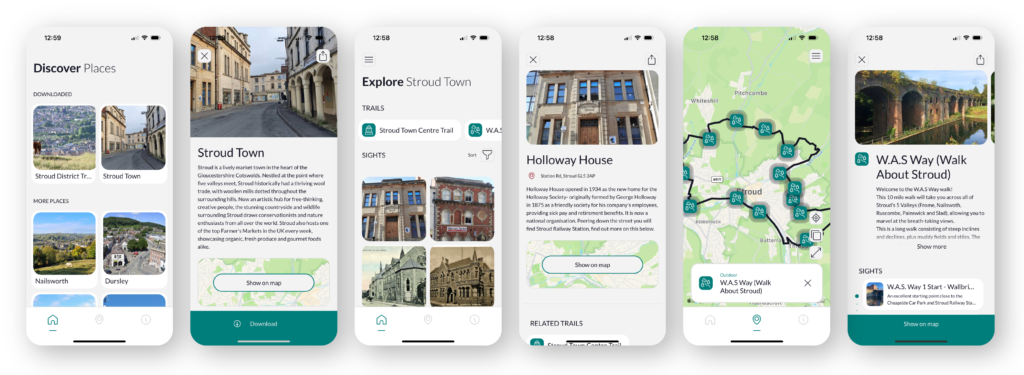
Discover Stroud Trails is a mobile app that lets us highlight the town’s offer, via visual means. Having the visual aspect is why the app has worked so well, because you’re not just looking at a map that you follow around. Having a digital experience makes it more exciting for visitors as it engages them with the location in a deeper way and gets them to think about what they’re doing and interact with what they’re doing. Hopefully, we can evolve the offer and create more digitally-enabled visitor engagement with other areas of Stroud District.

Amy B – It’s been exciting to work on something that’s quite innovative for local authorities. Being able to use the placemaking app to support a broader age range of visitors that are accessing our space is inspiring. Predominantly, our visitors are a slightly older generation, so a goal of the Discover Stroud Trails app is to appeal to Gen Z and help them to find out about us using their preferred methods and devices. We’ve got to be really proactive with that approach and do so in a way that is user friendly – supporting older generations to utilise the app.

Screens from the app showing maps, trails, information on points of interest

Your Discover Stroud Trails app uses Calvium’s Place Experience Platform – can you give the background to your involvement with the platform and what value you anticipate it will bring to Stroud District?

Amy H – The app was originally funded by the government’s Welcome Back Fund to increase visitors numbers into towns after Covid-19, so we worked very closely with the towns of Berkeley, Dursley, Nailsworth, Nailsworth, Stonehouse, Stroud Town and Wotton-under-Edge to get the initial trails out there. The trails are designed to guide people around the town and reveal a range of interesting stories about the place.

“We’ve undertaken some preliminary research that shows a positive correlation between an increase in footfall in our towns and the promotion of the app on social media.”

Increasingly, the analytics indicate that when we promote the app through our social media accounts, there is a positive correlation on the increased numbers of users downloading those trails or just generally downloading the app. From what we’ve seen so far, there has been a nice value added already. Now it’s about the opportunity to increase that and see what we can add to the app to make the user experience even better, and how we can retain these visitors.

Amy B – Cost of living is impacting our businesses – and our businesses are our residents and communities – so we’re focusing all of our walks on the app on how we actively encourage footfall past our tourism destinations, whether that’s a museum or coffee shop. It’s a really holistic approach to supporting economic development and our businesses. I’m proud of the fact we can offer this solution, with an aim to improve the spend at our businesses while encouraging that inward spend from residents, especially at the moment.

Can you describe the Discover Stroud Trails app and its visitor experience?

Amy B – The mobile app provides walking routes that are town-focused, such as for Nailsworth and Stonehouse, as well as district-wide. So we have really localised walks and opportunities that take you through specific places, and also larger walks that go across the whole of the district. When you pick a walk, it will highlight where you’re going and some key focus points as you’re walking. In Stroud Town, for example, we’ve highlighted some of our historical monuments or buildings and the app gives you information about them.

In future we can also include different features that enable visitors to engage with the towns in alternative ways, historic maps and treasure hunts for example. We’ve got lots of historical societies and are keen to work in partnership with them to design new ideas and content for our placemaking app.

Para gliders over the common
Photo: Stroud District Council

Amy H – One of the things I love about this digital experience is that there are so many hidden bits and bobs in Stroud District that you wouldn’t know about – even if you live in the town – so it’s a great support to our visitors when exploring the area, and it is also really beneficial to our local residents.

Although a lot of trails don’t overtly highlight local businesses, it might be the case that a particular walk guides people past five businesses and so it is very strategically placed. The additional information then might say ‘there’s a great coffee shop here’ or ‘did you know this is the first vegan cafe in the UK?’, so it’s a great opportunity for us to be able to promote these areas in subtle ways.

How did you go about imagining and creating the experience and content?

Amy H – The first trails we had were town centre-focused given the funding, so when I joined it was six market towns that were going to work together to create this app. It was super having that expert knowledge from locals from the get-go.

We work very closely with our destination management organisations who are good at highlighting key dates and events, and so we cater certain walks around those. We aim to publish two trails every month, whether that’s a generic one we have pre-planned or if it’s themed to other activities. This might be around Christmas or Halloween, to highlight a local food or film festival, or where best to see bluebells and snowdrops in the Spring.

It also depends on what our customers have asked for on our social media. We ask them every now and then what trails they want to see and if they like certain content, which helps us to decide what’s going to come next and how we want to build the visitor experience.

Have you had any feedback to the Discover Stroud Trails app yet from your communities – e.g. businesses, visitors, residents?

Amy H – We had a really nice review from a local saying they had found out loads of things they never knew about! Our towns and parish councils are really supportive – especially with our initial trails because it was all trial and error. Because the trails are so quick and easy to upload, we get a lot of quick feedback from the usage of the app and how it works.

Talking to different people using the app – the council, visitors and businesses – it’s always people asking what they can do with it. On social media, people sometimes suggest little edits they’d like to see, which we can take to Calvium and ask if this is an upgrade we might be able to do in the future.

The feedback in general has been very positive and it has all been constructive criticism about how we can improve and have this amazing visitor experience for all people.

Amy B – Amy Helliwell has been speaking with the businesses, not only introducing her role but also the app. Many of our larger and smaller businesses are happy to have a QR code in their reception area or coffee shop to encourage users to download it, which is testament to the quality of the app. It’s a win-win situation: we highlight their destination and they in turn highlight the app, so it should have benefits for everyone.

10383844 725157660878397 7540976725505927545 o2
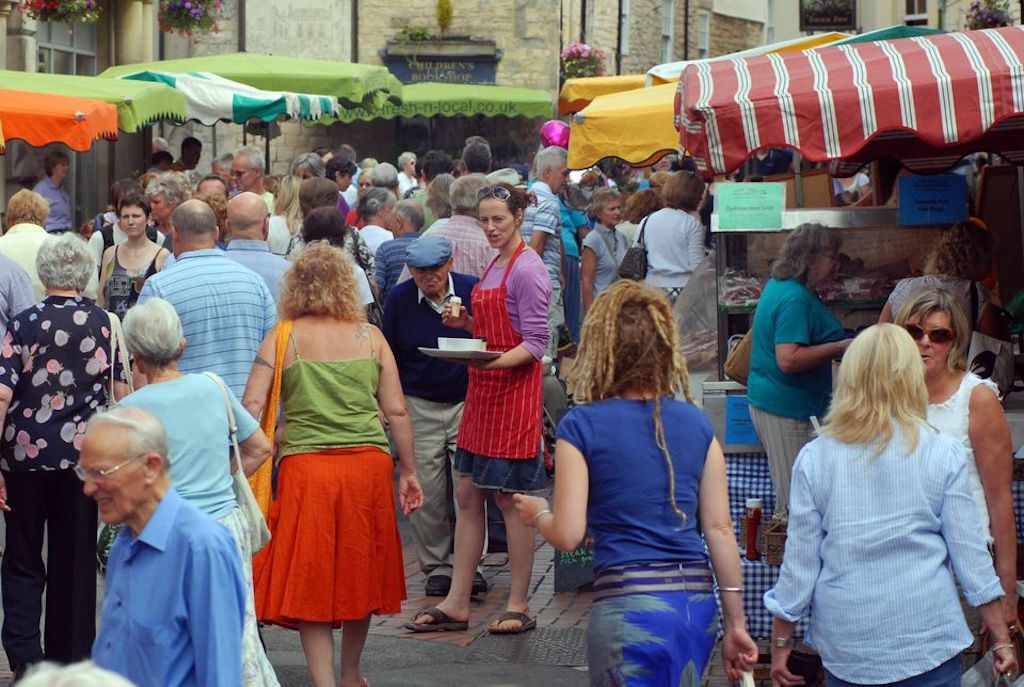
Stroud Farmers’ Market
What have you discovered/encountered working with digital technologies and information/content – has it changed the way you see future storytelling and visitor experiences?

Amy B – This is a really nice addition to what is already done. There is still a long way to go with some people, whether that’s residents or visitors, and the trust in the digital apps. Also the understanding of the wider support that it can offer in the economic development strategy and that focus on trying to increase footfall and spend in our areas. It’s just one prong on a lot of things we’re still responsible for that is really seeing an increase in a positive way.

So I don’t want to say we’re just going to do digital stuff, because that is not what our audience wants; some of our customers and businesses still want to see different approaches, and rightly so, and we have to be very mindful of the speed with which we do these things. But it’s an excellent way to start enhancing the offer that we have, and pulling some of that work and those opportunities into modern-day technology.

Amy H – We don’t want to go in all guns blazing and it either not work as well as we want it to, or have backlash to anything we do. It’s about easing people into it and showing the benefits that digital technology can have. For example, with the key threats of the future – the environment and sustainability, etc. – technology can help with that and there are ways we can use it as a means to educate the people on what they can do.

“The app allows us to highlight different aspects of a destination that might not be good for somebody with a particular disability, such as raised areas or cobbled streets.”

Technology also helps us to cater for everybody with regard to accessibility. Whereas the accessibility of certain places might not be obvious on paper resources, the app allows us to highlight different aspects of a destination that might not be good for somebody with a particular disability, such as raised areas or cobbled streets.

Are there any words of wisdom that you would pass on to other Councils or places seeking to create their own digital placemaking experiences?

Amy B – If you have the opportunity and there’s the appetite within your local area, just go for it. Calvium have been brilliant; the team has been so hands-on and are so passionate about the work they deliver, it’s hard to not be excited by all of the opportunities.

Amy H – Trust the process. It’s one of those things that is about trial and error, which sounds a bit scary. You have the option and freedom to try different things with Calvium, to go back and forth and make something that is intrinsically your town and works for what you want it to be. Make sure you’ve got a really good support network behind you as well – your parishes and councils – and make sure you lean on Calvium and their knowledge.

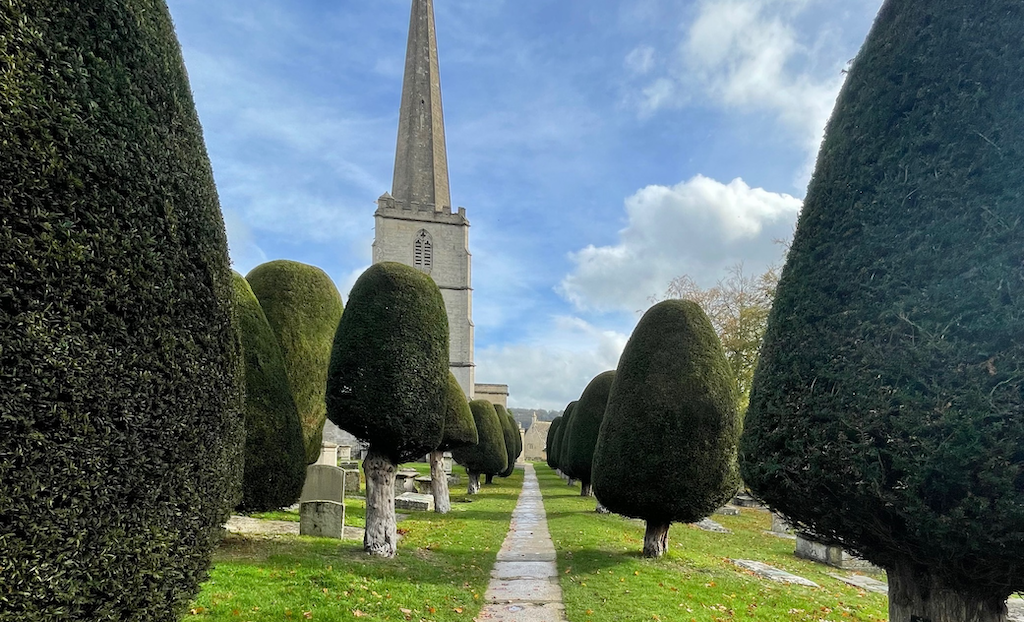
Painswick church with trees

Calvium are specialists in designing digital placemaking systems and are keen to develop innovative solutions for people, place and planet – are there any aspects of your environmental development strategies that could benefit further from digital innovation?

Amy B – Within the district and our local authority, we’re working really closely with a number of different departments in the council to look at how the app is of a benefit to a wider reach than just economic development and being a placemaking opportunity; from teams responsible for sustainability and net zero to those working on canal restoration, communities and wellbeing, and cultural strategy. We will look at the legacy with a really holistic approach to make sure it is fit for purpose and does reach multiple audiences and deliver multiple priorities for the district.

What was it like working with Calvium?

Amy B – It’s been excellence from beginning to end. It’s great to work with an organisation that’s passionate about what they’re delivering. You can trust what they’re saying and doing, and how they’re supporting you.

To deliver excellent visitor experiences for your town, contact Calvium now.

The team would like to thank all the contributors and the towns of Dursley, Wotton-under-Edge, Nailsworth, Stonehouse, Berkeley and Stroud Town in bringing this project to life.

Amy Beckett, Senior Economic Development Specialist
With 10 years’ experience in supporting local areas to grow their economic development offer, Amy joined Stroud District Council in September 2020 to establish and develop an economic strategy for the district. As part of her remit, tourism and placemaking was highlighted as one of the key opportunities for the district.

Amy Helliwell, Tourism Officer
Having always lived in Stroud District and previously running one of the top tourist destinations in the district, Amy joined Stroud District Council in 2022. Amy’s role is focused on enhancing Stroud District Council’s contribution to tourism, and thinking about how the Council can collaborate with other parishes and tourist destinations to promote tourism in the area.

Interview with David Rosenthal: the future of place-based digital storytelling

By Place

Calvium has collaborated with the University of Exeter on the thriving Hidden Cities project for over a decade. Dr. David Rosenthal is a historian at the University of Exeter and the co-founder and trail director of Hidden Cities.

In this interview David describes how place-based digital storytelling can transform streets into a stage, and transport audiences to a different era. He also shares his thoughts on how digital technologies have changed storytelling over time, how he sees this field developing, and offers his top recommendations to future locative storytellers.

Photos and job titles of David and Jo

You have been working at the intersection of history, storytelling and locative digital media for a number of years. What initially piqued your interest and what motivates you nowadays?

I’m an urban social historian of early modern Italy by training and one of things I’m interested in is what people do in public space and the interactions they have, the kinds of groups they form, the places they go to and how they behave and move around. Both in an everyday way and also at certain special or unusual occasions, such as a procession, or an uprising, or some other event.

Fabrizio Nevola, Professor of Art History and Visual Culture at the University of Exeter,  asked me to collaborate with him back in 2013. He had an idea: if you’re interested in space, movement, people and buildings, doing something with geolocated mobile media seems like a no-brainer. Very few other historians, and almost no other historians of the early modern world, were thinking about how to do history on your phone. That’s how we got Hidden Cities going, starting in Italy with the Hidden Florence mobile app.

What motivates me is the question of how, along with the specialists with whom I collaborate, do I present a fragment of a past world, hooked to place, in a compelling way? I want somebody opening the app on their phone to be intrigued, entranced even, so they keep going from site to site around the location. I think social historians do what they do partly because they enjoy telling stories in the first place, and for me this also comes out of my former life as a journalist.

Has using digital technologies changed the way you see storytelling and audience experiences?

Completely. Telling a story on a page is totally different to the way you tell it in physical space with audio and images. With Hidden Cities, there’s always a historic map georeferenced to a modern street map, and there’s usually a critically fictionalised historical character telling a story at a site we take the user to.  So the storytelling is designed to encourage the audience to experience a kind of time bending, a sense of dialogue between past and present, the past and present of the space they are in and the social and cultural worlds that give that space meaning.

HiddenCities app - historic and modern maps of same area

In the wider field of digital place-based storytelling, have you seen a change over time?

It’s hard to track clear linear change over time, apart from the affordances of the tech – from early GPS to downloadable phone apps. It’s an emergent field and there are several models out there. I wrote a chapter about public history and mobile media for a volume about Hidden Cities, which came out last year, and I realised how we’d used elements from several different kinds of apps. Models like first-person and third-person storytelling. Linear or non-linear narratives across a route, combining audio, images and text at each site.

But there were also some fascinating experiments in gamification from the early days of GPS – so clunky GPS gear in a backpack – that are still to be properly followed up. Back in 2005 HP Labs did Riot! 1831 in Bristol using a kind of sandbox game model. Another example is Ghosts in the Garden in Bath from 2012. To be honest, we’ve only scratched the surface of AR gaming, at least in the history arena.

Read more in Hidden Cities: Urban Space, Geolocated Apps and Public History in Early Modern Europe.

Calvium’s Dr Jo Morrison contributed chapter two, discussing the technical development of the project.

Which organisations do you feel are currently doing the most exciting and impactful work regarding locative media and digital storytelling? 

In the UK, I’d struggle to find an organisation more innovative than Calvium in this field. The Lost Palace for example was a great experiment using bespoke mobile media to tell stories, especially in bringing to life a vanished piece of urban fabric, in that instance in London. In mobile media art installations, I don’t think anybody should go past the kinds of things that Janet Cardiff and George Bures Miller have been doing for many years and continue to develop.

In history, probably one of the best and biggest is Cleveland Historical, which also developed a platform called Curatescape that’s used in about 30 cities around the world. Cleveland makes historical trails with pictures and text. But they also do interesting stuff with audio. They have one trail, for example, called African Americans in Cleveland, where users can go to a bar that was massive in the US jazz circuit in the mid 20th century and hear testimonies from people who attended and played there. I also like Soundtrails, an Australian app that looks to bring to the surface the experience of indigenous people. It  uses mainly oral testimony to piece together superb situated documentaries. Exciting in a different way is an app like Clio where people can add their own trails on a fairly basic platform.

There are of course plenty of app-ified versions of basic guidebooks, but a few of these are quite inventive – for example a recent UK app called Window Seater which tells you what’s passing by outside your window when you’re on the train.

Topographical map with dotted path leading through blue rectangles, with location pins
Soundtrails – map of the Coombadjha Walk, in Washpool National Park, New South Wales
What does best practice look like?

I’d say one element of best practice in AR is to not get too carried away with the idea of immersion. There is an immersive element to AR, and that can be interesting and fun to play with. But what’s equally interesting is how you bring to the surface, or work with, what is actually a liminal experience. It’s that difference between the sense of place as it’s experienced now, and the other worlds that were once there, the memories of place, the experiences of other people in other moments.

Sometimes this otherness is thrown at you when the built fabric has radically changed, but often change is more subtle, it’s more about the changing nature of the sidewalk ballet, to borrow a phrase from Jane Jacobs, than the fabric itself. One other element is to be clear about why I am asking someone to stand at a site on what might be a wet Tuesday afternoon. How am I clearly making that something you can’t get without leaving the house. And, a related point, what’s the public history agenda? Very often for Hidden Cities that’s got to do with stories and lives that are not in the foreground when you think of a city’s monumental heritage.

How do you see this field developing? What themes are emerging?

I can see two at least. The first is the development of more gamified storytelling. AR gaming in general is still quite an undeveloped area, despite the massive take up of a few games such as Pokemon Go. Gamification in its many forms is going to be something that makes locative storytelling a more compelling experience for more people.

The other thing is 3D AR. For example, going past a site in which the building no longer exists and being able to use your smartphone to recreate it. You can do this now of course, but it will become more commonplace and also more integrated with audio storytelling.

Woman holding up a tablet inside an exhibition gallery, a 3D church shows on the screen of the tablet.
Hidden Florence 3D – an altarpiece can be seen in situ on a tablet, giving a sense of how it would have looked in its original location.
Turning to the telling of stories – what are the top recommendations you have for future locative storytellers, who are seeking to bring heritage or more general tales to the public realm?

Never underestimate users: they’re media savvy and they want stories that are meaningful and complex.

Think of public space as a theatre. If someone has got a mobile phone in their hand and you’re telling them a story, you’re transforming that space for that person into a stage.

Think about the positioning of the user and how you want to make them feel and think about a place. Then work out how to best use the technology you have to do that.

What opportunities do you see for digital innovation in relationship building between specialists (e.g. academics like yourself), communities (and visitors) and places?

Digital mobile media really is a relationship builder. It’s a tool that can take specialist research and translate it into something public and accessible. So it’s a way to build relationships with museums, heritage and community groups that also have an interest in the places you want to go, the objects you want to associate with these places, and the stories you want to tell.  There’s a great deal of room to explore co-production.

What can we expect from the Hidden Cities apps this year?

We have four new cities coming out – Copenhagen, Tours, Landshut and Venice. At the same time we’re developing how we do narrative drama in the street. For Hidden Venice, one of the trails is a true crime story that unfolds in 1730, where the user accompanies a cop trying to solve a case of serial sexual harassment in the city’s churches.

We also have a new trail coming for Hidden Valencia on the Spanish Civil War, our first 20th century trail. In this story we aim to entangle the user in a kind of thriller set in 1937, a game of cat and mouse featuring two characters, on one side an undercover Francoist, on the other a republican cop.

Depending on how we’re placed to develop the tech, in future these kinds of urban history adventures might become more gamified, with narrative and directional branching, as well as other possibilities using more interactive mapping.

Designing digital wayfinding products for the built environment

By Place

The first thing that springs to mind when we talk about wayfinding or navigation is maps. If we need to find our way somewhere, we just follow the blue dot and Google Maps will guide us to where we want to go. If lost and our smartphone is out of action, nine times out of ten the person we ask for directions will turn to their own digital map for the route. However, as mobile technology becomes ever more sophisticated, how we understand and experience wayfinding is expanding beyond ‘simple’ maps and navigation.

In his recent book entitled ‘Wayfinding: The Art and Science of How We Find and Lose Our Way’, Michael Bond writes “We lose a great deal by relying on GPS. It turns the world into an abstract entity embedded in a digital device. In exchange for the absolute certainty of knowing where we are going we sacrifice our sense of place.” In this article I don’t plan to disagree, rather I seek to bring more wool to the wayfinding tapestry by showing how digital placemaking tools that help us navigate can also enhance our sense of place.

Photo of city canal
Photo: Gabriel McCallin, Unsplash

Drawing on practice, I’ll explore four key themes: navigationinformationinterpretation and immersion – all underpinned by a human-centred design approach. Together, these lenses will ensure that we think beyond maps when wayfinding or navigation next comes up in conversation, or we are seeking to commission a project for our town centres, campuses, visitor attractions and so forth.

Benefits of digital placemaking for wayfinding

Wayfinding is all about finding one’s way using the information at hand to do so. In most settlements there are physical information signage and systems that we use to find a route from A to B, as well as the digital tools noted above. We also apply our spatial awareness, sense of direction as well as sociability – asking others for directions or confirmation that we are situated where we think we are.

Digital placemaking enhances a traveller’s wayfinding experience and can improve the experience of all locals.  

Digital technologies add new opportunities for wayfinders, such as:

  • Personalised interfaces allow users to access information in modes that work best for them
  • Voice control gives people with sight loss the ability to receive more detailed voice guidance and new types of verbal announcements for walking trips.
  • Additional types of information can be accessed from different sources
  • Dynamic interest-based route types provide ways to move around a place that most suits the visitor and can reduce bottlenecks, thus benefiting all in the locale
  • Location positioning of others helps when fathoming their whereabouts in relation to your own
  • Interaction with a setting enables people to engage with a site as they move through
  • Immersion and incidental wayfinding provide deeper and alternative ways to experience a location and develop a sense of place.

This list offers some ways that digital technologies are enhancing our wayfinding experience and expanding our framing of wayfinding, without eroding our sense of place.

Now, turning our attention to digital placemaking for improved navigation…

Navigation: accessibility and inclusion

Let’s start with a few stats from Scope that provide context for this section: there are 14.1 million disabled people in the UK, that’s 1 in 5 people. 40% of households have at least one disabled person and those homes equate to a spending power of around £274 billion per year. None of these numbers are small.

This section focuses on digital tools to support disabled people to navigate public spaces independently and with confidence. To do so it draws upon two case references, both designed by Calvium in concert with the intended users, i.e. following an inclusive and human-centred design approach.

‘78% of disabled people say that having access to digital technologies is helpful or very helpful.’ – bighack.org

NavSta is a mobile wayfinding system that aims to remove barriers to travel. It has been designed to support passengers with less visible disabilities to plan their journey through a railway station, undertake their journey and manage uncertainty during a journey. This includes providing dynamic routing, landmark-based navigation and critical information about specific stations, e.g. the availability of accessible toilets, stair-free access and quiet places.

Person with phone and headphones in underground station
NavSta was highly commended for Neurodiverse Research of the Year at the Genius Within Awards. Photo: Andrea Piacquadio, Pexels

The United Nations talks about the negative effects of disability-based discrimination and the World Health Organisation states that “environments – physical, social and attitudinal – can either disable people with impairments, or foster their participation and inclusion.” NavSta demonstrates how digital tools that are designed for and with disabled people can open up public spaces and enable them to become more active wayfinders and, therefore, participants in the dynamic life of a city.

Similarly, the UCAN GO mobile app enables people with sight loss to navigate complex indoor cultural venues. Mapped by visually impaired members of UCAN Productions, the routing feature supports a user to identify their position in a building and find their way around it, using visual cues presented as image and text. Visitors receive simple step-by-step landmark-based instructions that direct them to their chosen destination. This navigation app helps disabled people to be independent and confident wayfinders when taking part in cultural events.

Drawing on valuable insights from those two projects, I was invited to write a chapter for the esteemed Smithsonian publication, ‘Inclusive Digital Interactives: Best Practices and Research’. In it I discuss how the application of an inclusive and holistic design approach to the interconnected problem area of people, place, technology and data, can produce digital wayfinding tools that help users to overcome common barriers in the physical environment.

Layered information

PopMap and Bristol Parkhive are two digital wayfinding projects that demonstrate how layering information about a location can bring a place to life and transform how people understand and connect with local areas.

We partnered with City ID towards the end of 2019 to develop the PopMap app, which shows a detailed map of the events and activities that are happening in real-time in Bristol. Through an intuitive map interface and a graphical ‘radar’ that reveals real-time information to a user based on their preferences, PopMap allows users to tailor what they see based on the time, where they are and what they want to do.

Bristol Parkhive, meanwhile, uses GPS to identify nearby parks and green spaces to help people find and explore new areas of the city. In addition to providing directions to the area, the app also provides a range of enhanced content, such as individual stories about specific sites that have been co-created by local people, and lists the individual features of each park including toilets, play areas, sports facilities, cafes and water features.

Both PopMap and Parkhive are great examples of providing layers of information about a place in ways that encourage people to discover their locality – at the same time, boosting local cultural and tourism sectors.

Person walking in a park
Photo: Gautam Krishan, Unsplash

Interpretation

Another unique aspect of digital placemaking for wayfinding is the ability to open up the stories of a place, which is exactly what the Place Experience Platform (PEP) has been designed to achieve.

Developed for place managers to share the stories of their location to visitors and to guide them around the area, the Place Experience App presents layers of cultural meaning alongside familiar maps. Place managers have the power to provide plural heritages, enable multiple voices to be encountered, and alternative histories and future perspectives to be found.

The platform has already been a finalist for the 2021 Platform of the Year Award and adopted by a number of European cities including London, Hamburg and Valencia.

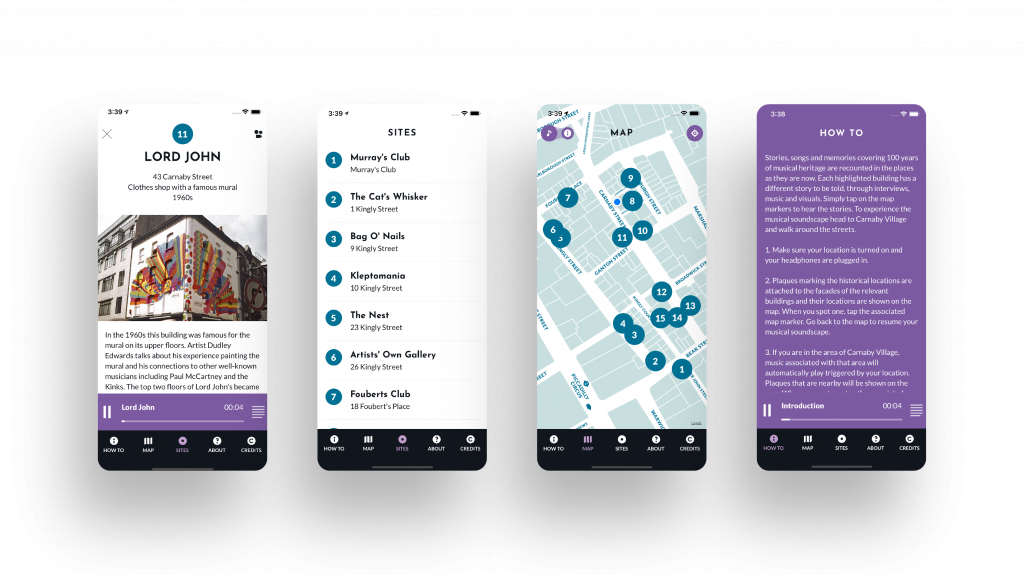
Carnaby Echoes reveals the hidden stories behind 10 decades of London’s Carnaby Street locale. As you walk around, the app connects the sounds, stories and characters from locations around Carnaby Street with a series of embedded commemorative plaques. These then link to film and audio interviews that are connected to individual buildings.

The suite of Hidden Cities apps, meanwhile, combine augmented reality and digital placemaking to allow people to navigate the streets of Valencia, Exeter, Hamburg, Diverter and Toronto, while fictional characters lead them through the forgotten histories of these European cities – all in their chosen language. An additional feature that serves to build people’s relationships with a place is the ability to move around a city using a 15th century map of the area – just like Hollywood actor Rebel Wilson in Florence!

We made it a design priority to design and build PEP to meet WCAG 2.1 accessibility guidelines; ensuring that the digital placemaking experiences can be enjoyed by as many people as possible, whatever their needs and preferences.

Immersion

Carnaby Echoes and Hidden Cities demonstrate how digital wayfinding can be used to create meaningful experiences in physical environments. However, the potential of technology doesn’t stop there and it can even be used as a means to guide people around today’s built environments whilst being immersed in places that no longer exist.

The Lost Palace of Whitehall might have burned to the ground more than 300 years ago, but digital placemaking technology allowed us to build an immersive visitor experience on its original site in the heart of London. Using a combination of expertly crafted storytelling, bespoke handheld devices, binaural 3D sound and haptic technology, we were able to create a dramatic performance located in the exact place where the palace once stood. Visitors were immersed in history, where it happened.

Wayfinding played an essential part in The Lost Palace experience as the set and stage were the streets of central London. As such, being both critical and incidental to the immersive theatrical experience, the wayfinding solution was carefully crafted across the digital device and the physical location.

Early visitor feedback was overwhelmingly positive, with 93% agreeing or strongly agreeing that the experience was unique compared to other experiences they had had at other visitor attractions. 92% agreed or strongly agreed that the experience brought the history of the time and place to life, while 90% said the experience made them feel more connected to the past and the history.

Human-centred design

The examples I have talked about in this article all have one key thing in common: they are underpinned by inclusive, human-centred design. At this point I’ll return to UCAN GO and the Inclusive Digital Interactives chapter mentioned earlier in order to illustrate the importance of adopting a human-centred design approach for digital wayfinding projects:

Photo of person in Wales Millennium Centre using UCAN GO on phone

UCAN GO is a standalone iOS app for visually impaired people to navigate complex indoor cultural spaces independently and with confidence. The app has two main functions: an overview option to orient users and a route finder to independently navigate a space. It is a free digital tool that “breaks new ground in disability research and mobile technology” (Fyfe and Vladichis, 2019).

At the heart of UCAN GO is an ethos that embraces inclusive research and design. As such, a co-design approach was employed from the start of the project and maintained throughout, from concept to deployment. Young people with visual impairments worked alongside the designers and software engineers from Calvium to imagine, research, design and map the mobile solution. It is in this way that the key elements that make up the UCAN GO solution were identified: personalization of the app’s interface and routing options, landmark-based navigation communicated in multiple modes, and a mobile solution which was not dependent on digital connectivity or technical hardware installed at the venue.

“As the app has been designed by people with sight loss, it has features tailored to the needs or fears that the user group have.” – Digital Skills Officer of the Royal National Institute of Blind People

Once installed on an iPhone using a mobile data or Wi-Fi connection, the UCAN GO app requires no additional technology. Visitors to cultural venues only need to look at the interface or listen to audio instructions to use the routing function and move around the building. Due to the relative simplicity of the technology, users can also feel reassured that the app is unlikely to malfunction when they are in an unfamiliar venue. An additional benefit of this smartphone-based solution, identified during the project’s development, is that young people with sight loss appear to be using their phones in the same mundane way as their sighted contemporaries, therefore they are not drawing attention to themselves as being “different” or “vulnerable.”

In addition to it being a transformative tool for those with visual impairments — users [with] anxiety or simply those who worry about visiting new places said they also found the app extremely helpful. – Spence & Frohlich, 2015

The practice of considering inclusion in all aspects and at all stages of designing the UCAN GO wayfinding tool led to a solution that not only benefited the original user group, but had the potential for broader impact.

Conclusion

Whether through navigation, layering information, interpretation or immersion, this article shows how digital placemaking significantly expands how wayfinding is framed and places experienced.

It touches upon the ability for urban tools such as the Place Experience Platform to disperse people around congested hot-spots, spread footfall and spend to less visited places and bring in new revenue streams to local areas; demonstrating how wayfinding can provide value to all.

The article also highlights why it is imperative that human-centred design should underpin the digital tools that we design, focusing on the UCAN GO project as a case study.

I started this article by introducing Michael Bond’s book ‘Wayfinding’. In its epilogue he suggests that digital wayfinding tools that provide more contextual information about places would help us to “see more, remember more, feel more” – hopefully this article proves him right.

Digital wayfinding should be seen as an integral part of any place strategy.

Digital Placemaking: new book for place professionals

By Place

Reasons for writing this digital placemaking book

We have witnessed digital technologies evolve at speed over the last decade, with the Covid-19 pandemic accelerating digital transformation by an average of three to seven years in only a matter of months. With this, there has been a fundamental shift in the ways in which we understand the world and interact with places in the 21st century.

I have been researching and exploring the relationship between people, place, technology and data for a good number of years now, and regular readers of my insight articles will know I believe digital placemaking should be an integral part of all place strategies – from its unique ability to deepen people’s relationships, experiences and connections with places, to being able to significantly boost a place’s socio-economic value.

Calvium has received great feedback to the articles and we are excited to see a growing number of place professionals seeking to deepen their understanding of the opportunities that digital placemaking affords.

Spurred on by this enthusiasm for an area that Calvium is so passionate about, we have gathered and recast a series of articles into a comprehensive book, with the aim of supporting place leaders to create better place experiences through the positive and innovative use of digital technologies.

Any placemaker looking to shape their destinations in ways that offer multiple experiences for all visitors and residents should harness digital placemaking, and I hope this book will act as a springboard for practice and possibility.

freestocks Sm0WHQnZmlw unsplash2

What’s inside?

The book is edited in a way that offers a coherent, holistic and accessible look into digital placemaking and encompasses a broad set of themes, sectors and narratives, as listed below. While it can be read in one sitting, it can equally be read in bite-size chunks and you will still come out with insight and understanding.

The book itself is made up of 24 articles split into eight segments; aligned to the segments of Calvium’s ‘Digital Placemaking: Experience Design Toolkit’ framework. Each of these segments, which we developed through a creative workshop undertaken with London’s Cadogan Estates, contains three articles. These are:

  • Social & Leisure
  • Arts & Culture
  • Heritage & Identity
  • Mobility & Access
  • Environment
  • Economics and Project Value
  • Improving the Public Realm
  • Stewardship

What you will learn

Amid this rapid pace of technological change, this book will ensure you have a 21st century perspective for shaping 21st century place experiences. If you are not harnessing digital products, services and experiences in 2021, then you are working at a deficit and you are not going to succeed in the same way as those who already employ digital placemaking.

This book is written from a practitioner perspective and is thus grounded in practice – not theory. It provides a solid evidence base of the value of digital placemaking as a practice, and of incorporating digital placemaking into place strategies. So, if you are a place professional and looking to innovate and influence the direction of a digital placemaking strategy or decisions related to it, this is going to give you the insight and ammunition that will allow you to do just that.

Crucially, this collection re-enforces how digital technologies are central to how people build relationships with places – as social spaces, cultural places, economic places and environmental places – and it will show you how to harness the technology in a way that brings real value to places and experiences.

I draw on a variety of national and international case studies throughout, to show how digital placemaking works in practice in a variety of contexts and to ensure it offers insight when it comes to design, technology and user experience.

Carnaby Echoes App interface laid over the Carnaby Echoes app logo
Carnaby Echos app – created with the Place Experience Platform

Calvium’s Place Experience Platform, for example, highlights the benefits of being able to create digital placemaking experiences that are scalable, adaptable and have longevity. By focusing on the flexible nature of the platform, which allows place managers to change the stories of their places as and when they wish, it will show how digital placemaking can form a core part of any place manager’s long-term dynamic marketing collateral.

By contrast, The Lost Palace is an example of using digital placemaking in a way that is time-bound and specific to a location. While the Place Experience Platform allows place managers to update the stories of places and keep them fresh, The Lost Palace is designed to stand as a single theatrical piece and in one location. They serve different but equally valuable purposes.

MG 6011 2
Historic Royal Palaces – Duncan McKenzie ©

NavSta, meanwhile, is an example I have chosen that demonstrates the importance of inclusive design for successful digital placemaking; and how the thoughtful application of digital technologies can improve people’s experience of a place. Indeed, NavSta went on to be highly commended at 2020’s ‘Neurodiverse Research of the Year’ awards and shows what you can achieve when you put inclusive research and design at the heart of the project.

Ultimately, this book should inspire placemakers to have a greater sense of the possibilities for their own places and will show you how to unlock the power of people, place and technology in a meaningful way.

What next?

The book is free to order in PDF format from our Resources page.

We will also carry on developing the Digital Placemaking: Experience Design Toolkit which influenced the structure of this book. It is important to note here that while the book is a sister product to the Toolkit, it is also a standalone resource.

Calvium will continue to be leaders in digital placemaking, collaborating with clients to enhance people’s experiences of destinations through innovative digital technologies.

Place Experience Platform: the art of storytelling

By Place

Here’s a question: if the main purpose of advertising is to inform people about a product and convince them to buy from a particular brand, is there any point to an advert if the end user can’t remember the name of the brand? It’s a perennial struggle for advertisers; how do you make your content interesting, fun and engaging but also effective?

A slightly different challenge is apparent when trying to help guide people around a place using digital tools. While people know the brand (where they are), the crucial question then becomes: how can you elevate the level of endearment for that place?

There is, however, a fundamental link between advertising and digital placemaking: this is the need to know your purpose (why?), audience (who?) and medium (how?).

Drawing on Calvium’s experience of developing digital placemaking solutions, this article will explore how to build meaningful connections with places in a way that doesn’t disrupt the overall experience and enjoyment of a place.

Building connections through storytelling

At times the digital landscape associated with Place seems dominated by the likes of Google, Tripadvisor and Airbnb.

We see many digital experiences attempting to ape what these big digital players already do very well, which is catalogue information about a place in an incredibly effective yet ultimately transactional manner.

While a “directory” approach to information is necessary and serves an important purpose, it is impossible to compete with these digital giants. Surely, then, the time and effort that goes into this mimicry would be much better spent focusing on building and fostering those all-important deeper relationships between people and place?

samuel regan asante t9zcY7RBFPg unsplash

A place has history, context and is shaped by its people. There are stories to be told of ancient civilisations, historic buildings, closed down factories and new emerging industries. Speak to locals, dig out old photos and video footage from the archives. Create trails for different audiences – scavenger hunts for children, tours of incredible architecture, walks through the sites of gory crimes through the centuries…

Digital placemaking has the ability to bring places to life in the same way that a good book stimulates our imagination. Focus on the narrative and people will want to read your book over and over again.

There is another important synergy to note between the effectiveness of digital placemaking and advertising. In the same way that good brand-building can help an advertiser to boost sales, good place-based storytelling that elevates the level of endearment for a place can help to boost the local economy too.

For example, let’s imagine a digital placemaking experience is taking somebody on a journey through Georgian architecture and they pass a guitar shop. It just so happens this person is in the market for a new guitar and makes a mental note to pop in the shop when they are back in town next week. Ostensibly they are on an Architecture trail but it doesn’t mean they cannot still support the visitor economy.

kirsten drew goceAOi0sqY unsplash 1

Guiding people through spaces with digital placemaking

Storytelling sits at the heart of Calvium’s Place Experience Platform (PEP) and we were thrilled to be selected as part of the CreaTech Ones to Watch in September 2021 on the back of its development.

Our PEP incorporates a number of basic features that have been designed to bring to life the rich and diverse stories of places in an easy and flexible way:

  • It gives local placemaking experts the chance to write and update the stories of their area (editorial control of the content through a simple-to-use Content Management System).
  • It allows the option to explore ad hoc or through themed trails.
  • It allows people to enjoy the experience just as comfortably back at home on the sofa.
  • It accepts that different people prefer to digest information in different ways and so uses a combination of images, text, audio and video.
  • It works when there is no connectivity, which is still an issue in many urban centres and certainly in the countryside.
  • It recognises that not everyone finds it easy to consume data on a phone…accessibility must always be at the heart of good mobile design and we took great care to look at font type, colour contrast and layout.
A person updates the Place Experience Platform CMS from their computer and that information is fed to the app in real-time for the user to see
The Place Experience Platform

When done thoughtfully, digital placemaking has a powerful role to play in supporting the visitor economy. Here are some of our key considerations when thinking about storytelling through digital placemaking:

Fresh is best

Places are always changing, evolving and redeveloping – this means engagement with the community can be too. There are always new angles to the same place, which was why Calvium made it easy for non-technical contributors to add new content to the PEP and update place experiences instantly.

Be imaginative

A place has many stories to tell; you just need to be prepared to come at them from a different angle. This can be readily achieved through the PEP, like with Carnaby Echoes – a wonderful example of how the story of a place (Carnaby Street) was told through music and the people that lived and worked there.Carnaby Echoes App interface laid over the Carnaby Echoes app logo

iDetroit, meanwhile – which wasn’t built on the PEP – highlights another effective way to “map” a city through the story of its citizens. In this instance, through the clever use of machine learning, photography and immersive sound.

Be immersive without being disruptive

People can get carried away with wanting to use all the latest technology but tech should never be the destination of a digital placemaking project.

Ask what will best achieve the scope of your project, not detract from it – for example, an AR-based experience can be incredibly immersive and innovative but we shouldn’t be requiring people to look at their phones all the time if it swamps the enjoyment of a place.

We are big fans of audio here at Calvium. It is one of the most immersive experiences you can have and a key feature of the PEP for this reason.

yingchou han IJrIeCs3D4g unsplash 1

In summary

Harking back to those shared principles we touched on at the start:

Know your purpose. Using a digital tool to help guide people around a place can sometimes be about engagement, not simply a directory for transactions. If you have notched up the level of love for a place then you have increased the likelihood that people will want to spend more time in it.

Know your audience. If people have accessed your app or website then they probably want to be entertained as well as informed. Remember, different people will want different ways of digesting information so give them options. Whatever you do and however you choose to do it, storytelling should always be the aim.

Know your medium. Phones are great – they have made possible what was impossible not even that long ago – but they should never get in the way of the experience. The information should be accessible to all and the emphasis should be on the people enjoying the place – not the tech.

You can be immersive without being distracting and that is an important thing to remember when undertaking any digital placemaking project.

Putting the power of digital placemaking into the hands of place marketers

By Place

Digital technologies play key roles in the ways that most people in the UK connect to the world around them, whether planning a holiday, travelling to the high street or resting in a park.

For placemakers and place marketing professionals, whose job it is to develop marketing strategies for, and attract visitors (and investors) to a particular location, digital tech has become an increasingly important part of their marketing toolkit.

Place professionals are passionate about fostering vibrant destinations and welcoming public spaces, and digital technologies are supporting them to do this in a variety of new and innovative ways.

Wanting to support and empower professionals in this space, to increase engagement with their locations and boost local economies, last year we launched a unique digital placemaking platform to put the power of digital placemaking directly into the hands of place marketers.

The Place Experience Platform (PEP) is already being used in 10 cities across Europe and recently saw Calvium become a finalist for ‘Innovation’ in the 2022 UK Digital Growth Awards, as well as be recognised as one of CreaTech Ones to Watch 2021.

awards

With PEP gearing up to launch in five new locations, we wanted to give some insight into how PEP is helping to create distinct and memorable identities for destinations, deepen the connections between visitors and places, and foster ground-breaking changes in public spaces.

Features and functionality

On a top level, PEP combines the ability to create, deliver, update and analyse bespoke digital visitor experiences. Its USP is that it is an integrated system that gives clients the power of three digital place marketing and experience tools in one: an app for the public, content management system for place marketers, and an analytics dashboard to measure impact.

In order to ensure it would be easy to use for both place marketers in charge of the experiences and for the visitors, user-centred design informed all stages of the design and development of the platform.

VAV Mockup

Visitor App

The app attracts people to a destination, provides a unique experience when there and encourages repeat visits by:

  • Providing unique geolocated content about a destination, combining wayfinding, storytelling and up-to-date information.
  • Offering a responsive and personalised visitor experience, 24/7.
  • Acting as a place assurance companion.

Content Management System

The CMS is an easy-to-use, flexible and scalable tool that gives place marketers complete control of all the content seen in the visitor app. This is achieved by:

  • Enabling visitor experiences to be changed easily and quickly.
  • Allowing the co-creation of stories with communities or by professional practitioners.
  • Providing the ability to design and map place trails, which can help to draw visitors away from busy thoroughfares and bottlenecks that cause poor experiences.
  • Supporting the economies of less visited areas by encouraging visitors to move around the location in a guided way.
  • Allowing for real-time responsiveness.

VAV CMS

Dashboard

The analytics dashboard provides clear data visualisations of use by:

  • Tracking usage of key features to reveal visitor preferences.
  • Enhancing data-driven decision making.

How the Place Experience Platform solves key challenges

Today’s place marketers and placemaking specialists face a number of significant challenges around time, cost and resource, which PEP’s robust and flexible technology seeks to address.

Challenge: Town and city high streets have declining footfall and spend.

  • PEP benefit: Place marketers are tasked with supporting the local economy. PEP enables them to create visitor experiences that distribute footfall around a location – increasing dwell time and spend.

Challenge: Traditional marketing resources are static; including printed guidebooks, maps and posters.

  • PEP benefit: PEP enables marketers to easily change content, such as access routes in line with road closures, pop-up activities and stories. It delivers multiple types of geolocated content direct to users’ smartphones through a destination’s branded app.

Challenge: Traditional marketing materials are not customisable for individual preferences.

  • PEP benefit: The accessible app has personalisation at its heart, including language selection and customisable assets. It is also compliant with the most up-to-date Web Content Accessibility Guidelines.

Challenge: To create and update geolocated apps, the cost and time needed to commission third-party developers is significant.

  • PEP benefit: PEP empowers clients to create and publish their own app content, therefore streamlining workflow and saving budget.

Challenge: Local creative input fails to be sourced and applied to place marketing materials.

  • PEP benefit: Clients can help the regeneration of their places by co-designing diverse tours with and for their local communities, fostering a sense of inclusion and belonging.

Challenge: Most destinations do not have smartphone enabled geolocated experiences that visitors now expect 24/7.

  • PEP benefit: Marketers can quickly provide an always-on visitor experience. PEP was designed offline first and optimised for mobile use, meaning visitors always have access to a great experience, even without a mobile signal.

rob keating 7btPpJzvd0M unsplash

Place Experience Platform in action

Hidden Cities

Hidden Cities is a suite of apps that take users on guided tours of seven different European cities, combining augmented reality, digital placemaking and multi-language support to create an immersive experience that allows visitors to view each place through the lens of the past.

Users are led round the streets of Exeter, Valencia, Hamburg and more, by a fictional guide, who links the places they visit to stories from their own life and times. When the user arrives at each location, the app triggers the audio and site-specific content to display on the device, relaying each location’s narrative in the user’s language of choice – made possible by the multiple language capability of the app.

Salisbury Trails

Salisbury Trails is a prime example of how the Place Experience Platform can be used to support the economic recovery of a place. Following the deadly Novichok poisoning in the city centre in 2018, Salisbury was struggling to attract visitors and urgently needed to support businesses and boost tourism.

Calvium collaborated with Wiltshire Council to deliver a digital service that would enable visitors to discover the city’s unique heritage and points of interest and, hopefully, change tarnished perceptions of Salisbury in the process.

In addition to suggesting places to explore off the beaten track, shopping routes and places to eat and drink, the app also gives people the option to choose to follow defined trails and hear stories about particular attractions.

Screenshots of City Visitor Trail app

City of London

The City of London’s City Visitor Trail app launched in 2014, allowing visitors to explore London’s famous square mile on foot through a series of routes. Like many organisations, however, the busy visitor team reached a point where finding the time to add new audio stories and keep the information up to date had become a challenge.

Moving the app to the Place Experience Platform meant the visitor team could update its content in real-time, whenever they pleased, while keeping it in line with other campaigns and marketing materials – ultimately ensuring the app remains a key part of the visitor experience.

Measuring success

PEP’s success metrics relate to the empowerment of our client, the place marketer, in a number of ways.

In addition to reducing ongoing production costs, streamlining production workflow and increasing audience reach, PEP allows place marketers to save time in contractor management, and increase flexibility and opportunities for collaborative production.

The analytics dashboard enhances decision-making by allowing clients to track the usage of key features to reveal visitor preferences, contributing evidence for data-driven analysis of visitor experiences and wider marketing collateral.

For example, when students at the University of Exeter worked with St Nicholas Priory and RAMM museum to create content for the Hidden Exeter app, PEP enabled them to coordinate, produce and present their collaborative work to their community in a widely accessible and engaging format.

The future of the Place Experience Platform

The flexible nature of the platform means it is well-positioned to adapt to new technologies, policies and regulations, as well as changing consumer behaviours. It has an ambitious roadmap and will evolve over time as the requirements of people and places evolve.

The power of place-based digital storytelling

By Place

Digital storytelling is the fundamental underpinning of the social web. Whether through lengthy musings in a regular blog or a quick social media update, we are all storytellers when we post personal details about our everyday events and stories.

We are also drawn to other human stories. It’s why digital marketing is so effective; it can imbue the product or service with the essence of a related story to connect at an emotional rather than a logical level.

Places can also evoke strong emotional feelings. The chill of a shaded graveyard, the vibrancy of an outdoor market, the ghostly presence of bygone inhabitants in older buildings: the physicality of places plays to all of the senses so that you can literally react to the ambience.

The ability to use digital storytelling to elevate the natural curiosity we have in such places is what provides the magic, and therefore the power to influence. This is something myself and fellow researchers Richard Hull, Kirsten Cater and Constance Fleuriot were exploring almost two decades ago in our ‘Magic moments in situated mediascapes’ paper, which looked at how the distinctive feature of mediascapes is their link to the physical environments.

The findings are still very relevant today, although opportunities to harness the power of place-based digital storytelling are significantly greater now due to advancements in technology. This was one of the driving forces behind Calvium’s Place Experience Platform (PEP), which we launched to support placemaking professionals to enhance people’s experiences of the places they manage.

PEP makes it easy for our clients to create stories themselves or look to Calvium to curate content for them. This article will provide insight on how place-based digital storytelling has the power to entertain, inform and inspire positive change in today’s digital-first world.

girls 5287142 1920

Entertain

Classic audio tours have been a popular staple in a visit to a cultural site ever since the original Alcatraz audio tour established the genre in the 1980s. Revealing the lived reality from different perspectives – prisoner or jailer, master or servant, victor or vanquished – is an incredibly effective way for people to connect with a place’s culture and history on a human level. Not only does it bring theatre to a place, it helps to create empathy and intrigue while doing so.

Back in 2004, I was involved in the world’s first geolocated drama, Riot! 1831, which used Bristol’s Queen Square as a storyboard through which events and stories could react to movement to unfold the dramatic historic events at the place they happened.

This is a very early example of storytelling through digital placemaking, although the term hadn’t actually been coined at that point – nor the iPhone launched. It was Riot!, however, that prompted us to publish experience design guidelines and workshops that would support the understanding and evolution of digital placemaking over the years. In fact, it was one of those workshops that influenced the University of Exeter’s Professor Fabrizio Nevola to develop a successful blueprint for creating immersive time travel experiences, and which led to a long-lasting, and ongoing, partnership between Calvium and the University of Exeter.

Supported by our PEP, Hidden Cities is the fruit of that blueprint. The suite of apps take users on guided tours of seven different European cities, with fictional characters creating an immersive experience that allows visitors to view each place through the lens of the past. By linking the places visited to stories from the character’s own life and times, people’s relationships with each European city are enhanced.

Elements of gamification can also extend to classic trails to provide a different incentive to visit places, which is something we have recently incorporated into PEP.
VAV Projects 01 copy 2

Place Experience Platform allows placemakers to:

  • Add challenges to trails where an answer can be found on location.
  • Create hunts, whereby experiences can be constructed to draw people’s attention to seek out an oddity somewhere they might otherwise miss.

Pokemon Go and its nine million daily active users are testament to the power of place-based incentivisation. Whether for a challenge, scavenger hunt or catching a Pikachu, ensuring the story location is meaningful so the effort to get there is worth the payback is key to achieving maximum impact.

If you’re interested in exploring in greater depth what placemakers can learn from Pokemon Go, download our free whitepaper here.

Inform

Place-based storytelling has a unique role to play in providing information about a place. Not in the way that the likes of Google do by giving a catalogue of information, but by telling the story of a place, its origin and history. Just as blue plaques highlight a notable fact, digital storytelling can provide context and depth to bring it to life, helping to establish cultural norms and values from the past and present.

The Carnaby Echoes app we created for Shaftesbury Plc shows this in action. As visitors walk around London’s Carnaby Street, a host of commemorative plaques at key historic locations reveal the hidden stories behind 10 decades of local music history. The app enables people to be immersed in the sounds, stories and characters that relate to each plaque, providing visitors with a greater connection to the area as they are guided around the area.

In addition to the gamification elements, we have extended the informative capabilities of the PEP as well.


Place Experience Platform allows placemakers to:

  • Incorporate local events into digital placemaking experiences, for example flagging a nearby antique fair or bake sale at a community hall, or a sale at the local shop.
  • Include accessibility guides, such as the nearest disabled toilets or wheelchair and buggy-friendly routes – an area Calvium is working on to make even better in future.

Another important feature of PEP is that it can enable both armchair and onsite mode, which means people can access trails and experiences whether they are at a place in-person or at home. This can help to reduce anxiety as trails give assurance and help with planning – whether on the day when at the destination or when thinking about visiting somewhere in advance.

pexels andrea piacquadio 3884252

Positive change for people, place and planet

Having been at the heart of place-based digital storytelling from its very early days to the present day, I see its immense potential to inspire positive change for people, place and planet – especially with the way technology is heading.

For people

As I mentioned at the start of this article, we are drawn to other human stories. Having a greater understanding of the culture and history of different neighbourhoods and cultural mixes can help to enable more empathy for people and places, and so we must be thinking about how digital technologies can be used to achieve this.

The iDetroit app we created for Marcus Lion’s Human Atlas of an American City project highlights one of the ways in which digital can enrich place-based storytelling experiences. The app brought the stories of 100 underrepresented or misrepresented Detroit citizens to life through an immersive digital experience, enabling the user to hear the voices and stories of each individual and therefore connect with them on a much deeper level.

Image shows the i.Detroit app as it scans a portrait in the book, showing how the audio is played once image is scanned

For places

Just like film tourism, which can significantly improve a destination’s visibility and attract potential tourists to places, place-based storytelling has a central role to play in boosting local tourism and economic recovery. In addition to supporting the economies of less visited areas by encouraging visitors to move around the location in a guided way, place-based storytelling creates memorable experiences that make people want to go back to a place, and also tell their friends about it. A win-win for people and places.

For planet

Calvium is increasingly thinking about how PEP can connect to the environment more tangibly, to raise awareness of environmental issues and climate change.

World Without Oil is an early example of this. The alternate reality game, created in 2007, encouraged players to plan for, and engineer solutions to, a possible near future global oil shortage. The most compelling player stories and ideas were incorporated into the official narrative, posted daily.

Some places will naturally lend themselves to gentle activism enabled by place-based storytelling more than others. For example, walking through a nature reserve and being made aware of aspects that could affect it, or walking coastal paths and being informed that the path you’re treading on won’t exist in a year’s time because of rising sea levels.

It’s about finding ways to use those places in a compelling way to drive different thinking and more awareness.

As the Place Experience Platform continues to evolve, we look forward to seeing how it can play a more meaningful role in enabling positive change for people, place and planet.

Fantastic award for Place Experience Platform: digital placemaking at its best

By Place

Already a finalist in Platform of the Year 2021, Calvium’s Place Experience Platform aims to be the premiere global digital placemaking product that fuses technical excellence with outstanding creative prowess. Now, thanks to the Creative Industries Council, these ambitions are much closer to being realised. On 21 September 2021, the UK Minister for the Digital and Creative Industries announced that Calvium’s Place Experience Platform has been selected as a winner of the esteemed CreaTech Ones to Watch 2021.

Digital placemaking for towns and cities

Digital placemaking is all about experiencing the world around us through the use of digital technology – for information, interaction and immersion.

Digital placemaking enhances people’s relationships with locations and is an essential part of achieving the place strategies of our towns, cities and regions. Just look at the UK Government’s £3.6bn Towns Fund which is supporting the regeneration of 100 English towns – all of which will include digital engagement as a strategic priority. In addition, people’s use of digital technology and, critically, their expectations of tech to enable new types of interactions and relationships with places has grown massively. All of which sets the scene for the innovative Place Experience Platform – developed to improve visitor experiences and the local economies of towns and cities.

Place Experience Platform: fusing creativity and technology


The Place Experience Platform has been designed for towns and cities around the globe to connect with their visitors as never before. It is both an exciting visitor product – the Place Experience App, and a visitor management service – the Place Experience System.

The App attracts people to a destination, enables a unique experience when there and encourages repeat visits. And it does so by providing bespoke creative content about a location – combining wayfinding, storytelling and up-to-date information.

“As visitors engage with a destination through crafted content, expert storytelling and digital wayfinding, they discover less trodden paths, spend more time in a location and contribute to the wider local economy.”

Dr. Jo Morrison, Calvium

The content can be developed by a wealth of diverse creative practitioners from theatre, animation, sound design and more, or co-created using the combined imaginations of local communities. The platform provides opportunities for vital creative sector/technology collaborations and partnerships across industries and nations.

Using the Place Experience System, the creative content – text, audio, image, AR, can be quickly uploaded to the App by place managers – ready for visitors to experience. The system also enables a variety of trails to be plotted around a location to guide visitors.

Launched in 2020, several European cities, including LondonHamburg and Valencia, are already benefiting from the Place Experience Platform.

“This is awesome! Such an exciting example of 21st century placemaking and, even more importantly in the current climate, a brilliant tool for helping places inspire people to come and visit. Really cool stuff.” 

Visitor feedback

Salisbury in Wiltshire harnessed the platform as part of the city’s long term recovery strategy that places the high street, culture and growth at its core.

“As part of Salisbury’s economic recovery plans, the Salisbury Trails App is a perfect way to share the heritage of Salisbury with visitors in compelling ways.”

Terry Bracher, Wiltshire Council


Digital placemaking for all

An original creative technology solution for driving place-based growth, fostering local identity and enabling new forms of location-based media, the Place Experience Platform is both an exciting visitor experience product and a visitor management system.

The platform operates at the intersection of creativity, technology and place. It provides creatives from design, animation, theatre and more, the new opportunity to make and upload original locative content that helps to expand and reshape people’s cultural experiences of destinations.

The Place Experience Platform delivers new opportunities for people and places to connect, on a global scale.

Digital Engagement to Drive the Visitor Economy

By Place

The global pandemic triggered a near-total shutdown of international tourism to and from the UK. Although borders are starting to open and ‘tiers’ are being allocated on a regional basis, the outlook tends to change daily, making forecasting difficult. Needless to say, we are dealing with uncertainty and therefore should frame all that we design for as uncertain; anticipating many different futures.

Presently, the VisitBritain tourism forecast anticipates a decline of 73% on inbound visits and a decline of 79% in spending, equivalent to £60m a day. Inbound tourism numbers are expected to rise towards the end of the year, but these models are precarious.

Domestic tourism seems to be the saving grace of the tourism industry, even if it’s expected to recover gradually but unevenly across the country. However, the unpredictable local and tiered lockdowns, fear of new Covid-19 spikes in the short-term and general uncertainty about the experience of being in a place is a cause for concern for many visitors — and understandably so.


a woman is walking down a street with a backpack on and a colourful face mask
Source: Thomas De Luze on Unsplash

In this article, I want to explore the opportunities that digital placemaking offers the domestic tourism sector. I’ll look briefly at some challenges, some pre-pandemic sector trends and then shine a light on digital services that are being harnessed to support the visitor economy. I’m also going to introduce Calvium’s new digital placemaking solution – the Place Experience Platform – created to enhance the visitor experience of towns and cities, and support place-based recovery.

The UK’s Tourist Economy in Crisis

The UK could lose up to £22bn in tourism revenues in 2020 because of the coronavirus pandemic, predicts the World Travel & Tourism Council (WTTC)In the worst case scenario, three million jobs would be in jeopardy. This is the real world context within which place leaders and destination marketers are operating, and for anyone entrusted with supporting the local economy and place-based growth, this is a massively challenging time.

Challenges for Destination Leaders and Place Managers

With lockdown easing, the competition amongst towns and cities has become more intense. Winning the attention of a dwindling number of anxious domestic visitors and the few international visitors choosing to explore the UK is a daily challenge for destination leaders. Whilst trying to be mutually supportive as an industry, places in the UK are also in fierce competition with each other, as well as the other international destinations that have opened up.

As I stated earlier, we all have to accept that uncertainty is the ‘new normal.’ Therefore, place leaders need to invest in robust and trustworthy solutions that are also flexible and adaptable. When the context is uncertain, it is imperative to have viable visitor experiences that can be readily adapted to respond to ongoing flux. No more static printed resources, familiar campaigns or standard visitor products, nowadays the astute place strategist invests in the value of mobile-first digital delivery and digital placemaking.

Responsiveness was front of mind when designing the Place Experience Platform. I will talk more about the platform later in the article, but to give a brief overview, it is a digital placemaking solution for place professionals that provides a reliable way of delivering engaging and responsive visitor experiences swiftly, while, at the same time, enabling place managers to guide visitors around destinations as desired and provide up to date information when needed.


a woman is stood on a bridge in florence, italy and is looking to her right towards the river. She has her phone in her hand with headphones and the place experience platform logo is above the phone, indicating she is using the app.
Place Experience Platform


Visitor Pain Points

Before August ended, statistics from the Office of National Statistics revealed that 27% of adults were likely or very likely to go on holiday in the UK this summer. In fact, social distancing-friendly destinations like cottages, caravan sites, and holiday parks were booked up and many have taken bookings for 2021 at rates previously unknown.

Visitors clearly want to have a great time, but many are understandably concerned about safety and security when visiting a public place, especially since we’re all wary of not repeating the Bournemouth experience of this summer. Nowadays, tourists demand place assurance, which is why it’s important to give them confidence in all aspects of a destination. They research a place thoroughly prior to visiting, desire up-to-date information during their stay and want to enjoy themselves. A place that fails to deliver on these points, fails to attract or satisfy visitors.

With these challenges in mind, we need to play our part in inspiring people and encouraging them to spend time locally – making their experiences truly positive and memorable. Utilising digital technologies to attract visitors to a destination, help them plan their visit, show them around and provide meaningful connections to the uniqueness of places is a sure-fire way to revive the visitor economy. This can be achieved easily and quickly – with the right partners on board and a collaborative approach.


pexels andrea piacquadio 775091
Source: Andreas Piacquadio on Pexels


Pre-Pandemic Tourism Trends

Back in the days of mass tourism (2019!), we were seeing global trends that were poised to shift tourism’s trajectory. These trends are likely to become the norm for most destinations:

Minimise Overcrowding 

Overcrowding in tourist spots brings several issues like alienated residents, reduced visitor experience, unequal distribution and benefit, overloaded infrastructure, threats to culture and heritage, and damage to nature – for starters.

To minimise this, The European Travel Commission (ETC) began to move towards a ‘value not volume’ brand positioning as its marketing strategy for 2019. This strategy involved shifting from a demographic-based market segmentation to a behaviour-based one. Instead of emphasising specific destinations, the ETC started to highlight the experiences from each location, which would disperse tourist crowds more broadly based on their interests and attitudes. This approach is playing out in locations globally and is set to continue, probably spurred on by our recent context.

Environmentally Sustainable Models 

As restrictions started to ease up mid-way through 2020, the One Planet Sustainable Tourism Programme, led by the World Tourism Organization (UNWTO), announced its renewed focus on sustainability for the recovering tourism sector to better prepare the industry from future crises.

This vision, supported by governments and the private sector, will support Sustainable Development Goals, national policies, and individual place sentiment. In line with the programme, six courses of action for people, planet, and prosperity were recommended, including social inclusion, biodiversity conservation, climate action, governance and finance, public health and circular economy.

Place and Localism

Destination strategies are changing. Instead of wooing potential visitors with picturesque images of people sitting by the beach as the sun fades into the horizon, tourism marketing is now focusing on destinations co-created by residents, the industry and visitors.

This is especially apparent in Copenhagen, as the city saw how mass tourism wreaked havoc on the quality of life of residents in cities like Venice and Barcelona. To lessen the effect of tourism once borders are all fully open, the Danish city came up with a solution that will benefit both visitors and locals.

Called ‘localhood for everyone,’ destinations in Copenhagen are encouraged to see visitors not as tourists but as temporary residents. They will be part of the community however long or short their stay is. This can be achieved through a five-point plan that includes:

  • Enabling travellers, partners, and influencers to create shareable moments online
  • Encouraging repeat visits
  • Attracting new visitors from growing markets
  • Co-innovation where industries work together
  • People-based growth where the goal is not to increase the number of visitors, rather the value of visitors for all.
People walking on street during daytime in Copenhagen
Source: Darth Liu on Unsplash

Digital Services

Place Services and the Rise of Booking Systems

People use digital technologies to engage with a place at all stages of the journey experience lifecycle. This has ramped up massively since the pandemic, so visitors expect to have more digital information and digitally-enabled services post-pandemic.

According to Publicis Sapient, during the third week of March when most countries began their stay-at-home orders, calls flooded company contact centres, with wait times for customers averaging over two hours. One airline even saw half of its customers’ calls unanswered. As visitors will only demand more digital solutions especially when resolving travel concerns, businesses will do well with streamlining digital customer touchpoints, especially for cancellations and rebookings.

Increased Digital Engagement With Visitors

Digital marketing organisations will continue to increase their digital spend considerably. With this, print investment is expected to go down.

As more and more visitors prefer to have updated information in real-time, print, by its static nature, will swiftly be out of date. Digital channels are much more responsive to change, especially since lockdown rules are changing regularly.

Digital Technology at All Stages of the Visitor Journey

With the increased reliance on digital technology, visitors expect to engage with the destination at all stages of their journey – not only as they plan a trip but when they are walking around their destination.

Walk With Me: St Austell is one such digital visitor product. Calvium collaborated with the Kneehigh artists and poet Anna Maria Murphy to create this location-triggered app that narrates wildly exaggerated stories and tales as visitors walk around the St. Austell Bay area. Alight is another location-based app from our team, only this time it gives users more insight into several pieces of sacred art across London, Oxford, Chichester, New York City, and Washington DC.

Both these mobile experiences have a two-pronged benefit. For visitors on-site, they have more control over the locations they will explore as they can see the trail they will follow right from the start. Meanwhile, these apps also have ‘armchair’ modes, which allow users to visit each city without leaving the safe confines of their homes – helping place managers to market their destination.

the Kneehigh Walk With Me App is shown on a phone in an outstretched arm against the backdrop of a fisherman's harbour in Cornwall. The sun is shining and the skies & water are vibrant blue.
Kneehigh Walk With Me App

Place Experience Platform

Place managers need to attract visitors to their destinations and provide the circumstances for visitors to have a safe and enjoyable time. As we can see with the tourism trends, digital technologies are playing an increasingly important role in visitors’ lives and can greatly enhance their experience, which is why Calvium developed the Place Experience Platform –  to provide great and personalised visitor experiences for a destination’s target audiences, now and in the future.

What is the Place Experience Platform?

Calvium’s new Place Experience Platform is designed for those entrusted with supporting the visitor economy. It comprises of:

  • The Place Experience App which provides compelling content to visitors by combining wayfinding, storytelling, and real-time information about a destination
  • The Place Management System which puts control of the visitor experience into the hands of place managers.
Salisbury PlaceManager 2
A place manage creates unique stories, maps and information for visitors to enjoy through their smartphone


Place Experience Platform is a place assurance service that provides visitors with a ‘sense of place’ that can be aligned with that place’s unique marketing strategy.

Through wayfinding, storytelling and up-to-date information about a destination, place managers have the power to design and map trails that visitors can explore—potentially leading them away from overcrowded locations which can put their health at risk, damage the environment and cause strain in the infrastructure.

How Can Place Experience Platform Support the Visitor Economy?

Place Experience Platform is a visitor companion. The App helps people plan a visit and guides them around a destination, offering them entertaining content as well as more practical place-based information. Key benefits include:

  • Supports economies of less visited areas by encouraging visitors to move around the location in a guided way.
  • Enables visitor experiences to be changed easily and quickly, according to destination needs and growth strategies.
  • Draws visitors away from bottlenecks that: cause long wait times and clustering, strain infrastructure and damage assets, thus reducing associated management spend.
  • Simple, reliable and easy to use, putting control in the hands of place managers, thereby providing a responsive and flexible service.

Discover Salisbury Trails Visitor Experience

Salisbury Trails is the first visitor experience product to be released on Calvium’s platform. It was commissioned by Wiltshire Council to support the economic recovery and development of Salisbury. The app enables visitors to move around Salisbury’s streets and discover the city’s heritage, whether that’s locating off the beaten paths, exploring hidden gems, or following some fantastic routes for shopping, eating and drinking in the city centre.

Visitors hear stories about an attraction, read about it and see related images. They can choose to follow defined trails such as ‘Medieval Meanderings’ or ‘Witchcraft, Riots and Treason’ that present them with a range of related information while they walk around. The interface itself provides a seamless experience as the app has been expertly crafted with attention to detail throughout.

Discover Salisbury is available on the App Store or Google Play. Its content does not depend on an internet connection, allowing visitors to access it wherever and whenever they desire.

As part of Salisbury’s economic recovery plans, the Salisbury Trails app is a perfect way to share the heritage of Salisbury with visitors in compelling ways.

Shifting to Digital Experiences

Now is the time for place leaders to rethink visitor and tourism strategies, for all the reasons I’ve mentioned and so many more. We all need to take a radically different approach to how we relate to and respect the places we inhabit, whether as permanent or temporary residents. We need to develop a holistic approach to how we invite people to experience and understand our neighbourhoods and be part of our communities.

Digital placemaking is obviously a core part of any contemporary place strategy and as we’ve seen, there are myriad ways in which digital solutions and digitally-enabled experiences are enhancing people’s experience of places. The Place Experience Platform is one easy and simple digital product for place managers to use as part of their visitor offer, and it can be developed further for the unique conditions and context of a specific destination.

Seize the new thinking and behaviours that the pandemic has prompted alongside the tourism trends that were already in motion, and employ digital placemaking as the way to revitalise your visitor economy.